

Best Evidence for Partner Visa Applications
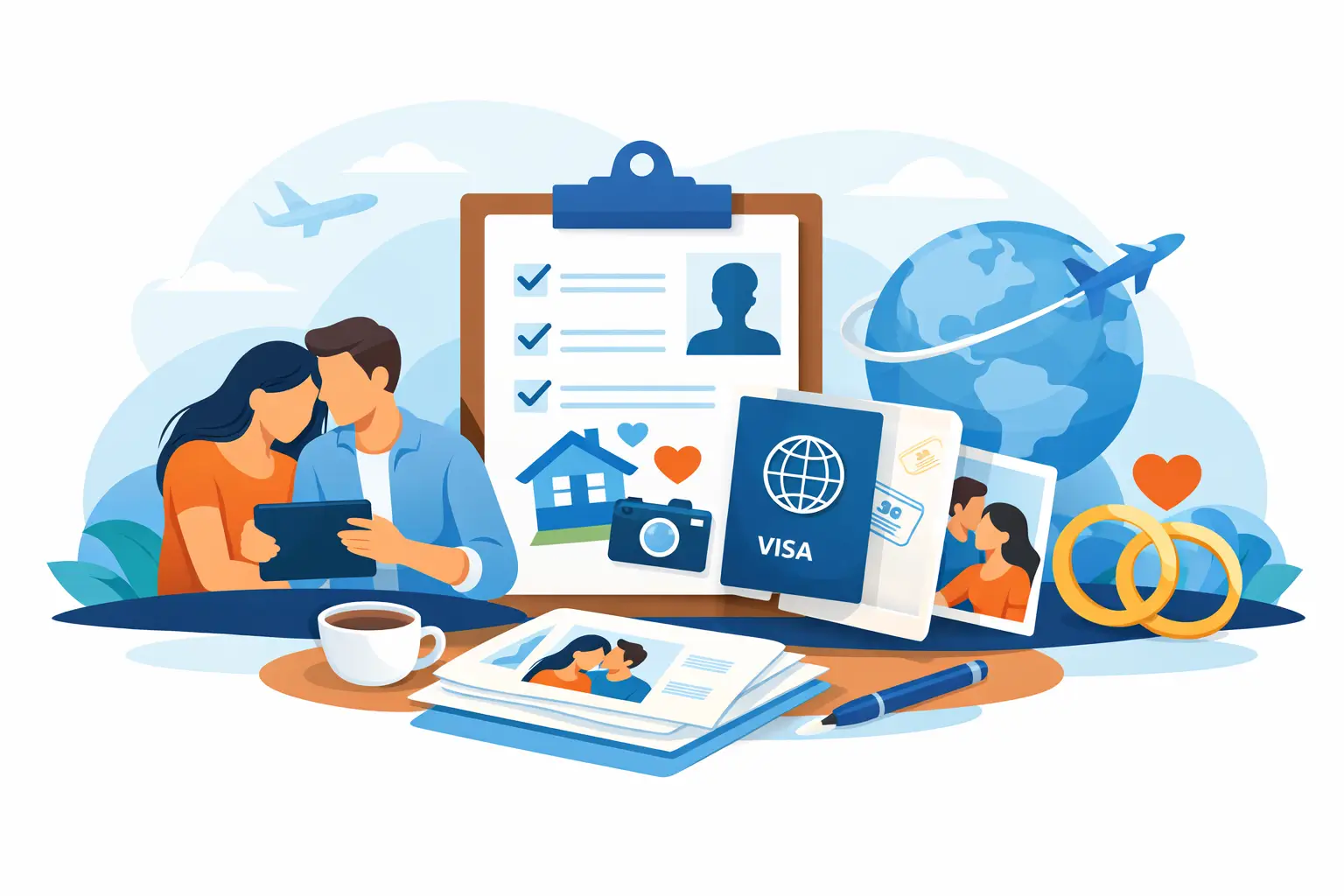
A partner visa application often turns on one issue - not whether your relationship is real to you, but whether you can prove it clearly on paper. The best evidence for partner visa matters is evidence that shows your relationship is genuine, continuing and shared across everyday life, not just during special occasions.
For many couples, that is where the stress starts. You may have years together, family support and future plans, but still feel unsure about what actually carries weight in an application. The strongest approach is not to flood the Department with random documents. It is to provide relevant, consistent evidence that tells a coherent story.
What case officers want to see
In Australia, partner visa applications are generally assessed across key parts of the relationship. These usually include the financial side of your life together, the nature of your household, your social recognition as a couple, and the nature of your commitment to each other.
That means one bank statement or a handful of photos is rarely enough on its own. A case officer is usually looking for patterns over time. They want to see whether you have combined your lives in practical ways and whether your documents support the same story from different angles.
This is why quality matters more than volume. If ten documents all show the same point clearly, that can be more persuasive than a hundred pages that say very little.
Best evidence for partner visa applications by category
Financial evidence
Financial material is often some of the most persuasive evidence because it can show day-to-day interdependence. Joint bank accounts can help, but they are not magic on their own. A newly opened account with little activity may carry less weight than regular transactions that show shared expenses over time.
Useful examples include joint bank statements, shared bills, rent payments, mortgage documents, evidence of one partner supporting the other financially, joint loans, shared insurance policies, and records showing both names linked to the same address or household expenses.
If you do not have fully joint finances, that does not automatically mean there is a problem. Many couples keep some finances separate for cultural, personal or practical reasons. In that situation, it helps to explain why and provide other documents showing how expenses are divided and how financial support operates in practice.
Household evidence
Household evidence helps show that your relationship is lived, not simply stated. Lease agreements, mortgage records, utility bills, mail sent to the same address, and official documents listing both partners at the same residence are all useful.
But this category is not only about living under one roof. It can also include evidence of how you share domestic responsibilities. Statements can refer to cooking, cleaning, caring for children, shopping, and managing the home together. If one person works away, studies interstate or has family commitments overseas, that should be addressed honestly rather than ignored.
Where couples have spent time apart, good evidence may include travel records, message history, money transfers, and explanations showing that the separation was temporary and consistent with a continuing relationship.
Social evidence
Social recognition matters because it shows whether friends, family and the broader community see you as a genuine couple. Photos are part of this, but they should not be the whole case.
The better social evidence usually includes invitations addressed to both of you, travel bookings, evidence of attending family functions together, membership records, correspondence, and statutory declarations from people who know your relationship well. Statements from relatives and friends are stronger when they are specific. A useful declaration explains how the person knows you, what they have observed over time, and why they believe the relationship is genuine.
Photos can support this category well if they show a timeline across different stages of the relationship - ordinary outings, family gatherings, holidays, celebrations and everyday life. Twenty meaningful photos with context are generally more useful than a folder of repetitive selfies.
Commitment evidence
Commitment is about the long-term nature of the relationship. This includes evidence that you have made plans together, supported each other through serious events, and built a shared future.
Examples might include wills, superannuation nominations, emergency contact records, future travel plans, joint property plans, pregnancy records, evidence relating to children, or written statements describing major milestones in the relationship. Communication records can also help, especially where there have been periods apart, but they should be selective and purposeful.
A strong personal statement from each partner can make a real difference here. These statements should explain how the relationship began, how it developed, important events, any periods of separation, and your plans going forward. The two statements should align on the key facts, while still sounding like two real people rather than copied versions of the same story.
The best evidence for partner visa cases is consistent evidence
Consistency is often the difference between a straightforward application and one that attracts concern. If your forms say you lived together from one date, your statements say another date, and your documents suggest something else again, a case officer may question the reliability of the entire application.
That does not mean every date must be perfect to the day. Small discrepancies happen. What matters is that the overall timeline makes sense and that any unusual features are explained early. If there were short separations, prior relationships, delays in moving in together, or cultural reasons for keeping parts of the relationship private, it is usually better to address those matters directly.
Trying to hide a weak point often creates a bigger issue than the weak point itself.
Common mistakes couples make
One common mistake is relying too heavily on photographs and chat logs. These can help, but on their own they often do not prove much about shared responsibilities, financial interdependence or long-term commitment.
Another mistake is submitting large amounts of evidence without structure. If a case officer has to work hard to understand your timeline, important material may lose impact. Clear labelling, chronological order and short explanations can make the application easier to assess.
Some couples also assume that being married is enough. Marriage is relevant, but it does not replace evidence of a genuine and continuing relationship. The same applies to having children together. These facts are important, but they still sit within a broader assessment.
A further issue arises when couples provide template-style relationship statements. If the language feels generic, vague or inconsistent with the documents, it can weaken credibility. Your evidence should sound like your life, not someone else’s sample.
What if your evidence is limited?
Not every genuine couple has the same paper trail. Some people live with family rather than on a lease. Some come from cultures where finances are not merged quickly. Others have had visa restrictions, long-distance periods or informal living arrangements.
If that sounds familiar, the answer is not to panic. It is to build the strongest case available from the evidence you do have, then explain the context carefully. Statutory declarations, communication records, travel history, support from family and friends, and well-prepared personal statements can all become more important where traditional documents are limited.
This is where tailored legal advice can be especially valuable. The right strategy depends on the facts. A couple with limited financial records but strong cohabitation evidence will present the case differently from a couple who have lived apart due to work or migration issues.
How to present evidence properly
Good evidence can lose force if it is poorly presented. It helps to organise documents under clear headings, keep them in date order, and make sure names, dates and addresses are easy to follow. If a document is unclear, a short note explaining its relevance can help.
Translations should be arranged where needed. Scans should be legible. Forms should match the supporting documents. If there is anything unusual in the application, address it in a calm and direct way.
This is not about making the relationship sound perfect. It is about making it understandable and credible.
When legal help makes a difference
Partner visa applications can look simple from the outside, but many become complicated because of missing evidence, timing issues, prior refusals, health or character concerns, or misunderstandings about what the Department expects. A lawyer can help identify gaps, strengthen weak areas and ensure the application presents a clear legal and factual case.
For couples in Sydney seeking practical guidance, firms such as SDC Lawyers assist with preparing evidence in a way that reflects the reality of the relationship while meeting the requirements of Australian migration law.
The strongest partner visa applications usually do one thing well - they make it easy for a case officer to see a real relationship supported by real evidence. If you focus on clarity, consistency and honest detail, you give your application a far stronger foundation from the start.