

Corporate Lawyer Fees for Small Business Australia Guide 2026
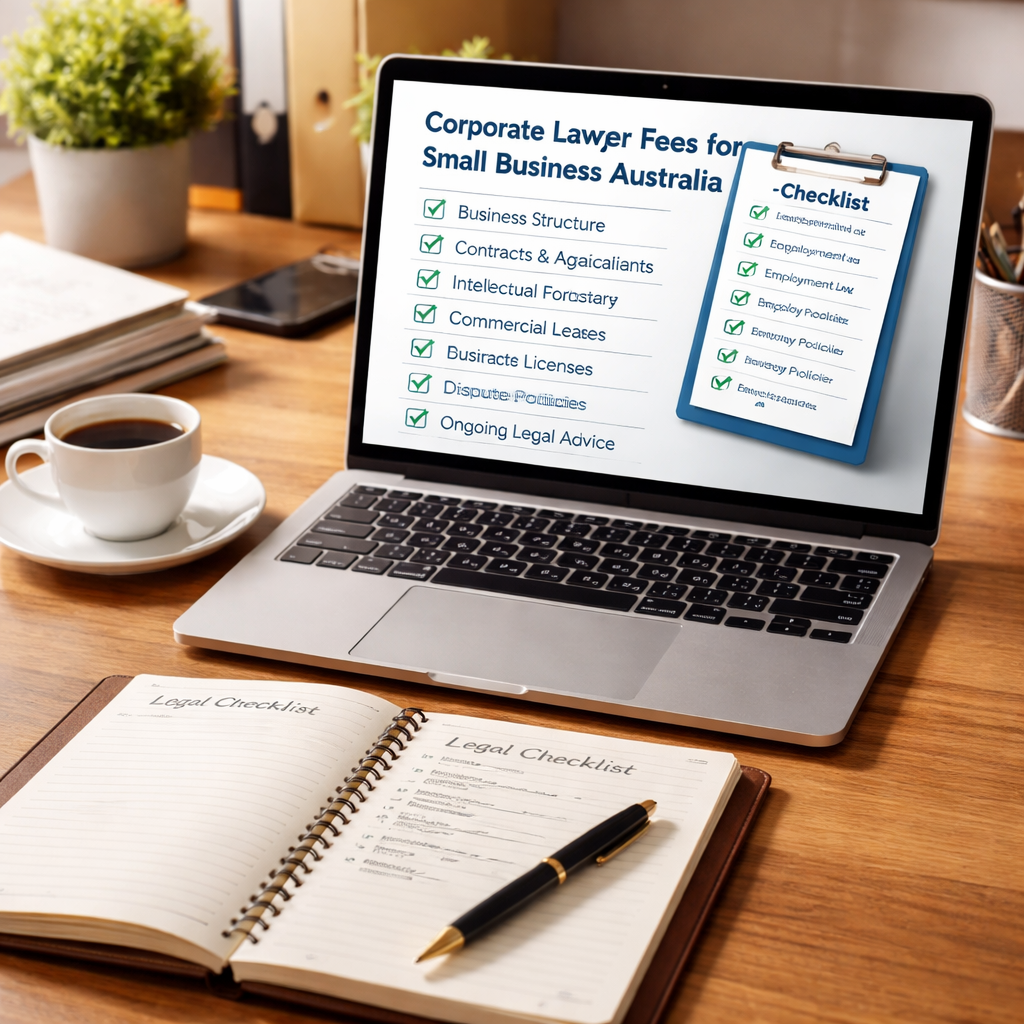
Small businesses often pay too much for legal help. You may think a lawyer’s price is set in stone, but that’s not true. In this guide we break down corporate lawyer fees for small business australia, show you what to expect, and give you tools to keep costs under control.
By the end you’ll know how fees are built, which billing model fits your budget, and how to pick a lawyer who talks in plain English. Let’s get started.
| Name | Fee Structure | Best For | Source |
|---|---|---|---|
| SDC Lawyers (Our Pick) | — | Best overall | sdclawyers.com.au |
| Sprintlaw | fully fixed fee | Best for transparent fixed fee | artificiallawyer.com |
Understanding Corporate Lawyer Cost Structure
When you look at corporate lawyer fees for small business australia, you first need to know how they break down.
Most firms charge a base hourly rate. That rate covers the lawyer’s time, not the office rent or admin costs. Hourly rates in Australia can range from $200 to $800 per hour, depending on experience and location. Sprintlaw explains these ranges in detail. They also note that senior partners charge the top end, while junior associates sit at the lower end.
Another piece is the retainer. A retainer is a lump sum you pay up front. It acts like a deposit that the lawyer draws against as they work. Some firms ask for a month’s worth of fees, others ask for a project‑based amount. The retainer protects the lawyer from non‑payment, and it gives you a budget ceiling for the first weeks.
Fixed‑fee packages are a third option. With a fixed fee you pay one price for a defined service, like setting up a company or drafting a shareholder agreement. The benefit is predictability , you know the cost before any work starts. The downside is that if the scope expands, you may pay extra or need a new quote.
Disbursements are extra costs that sit on top of the lawyer’s time. These include filing fees, search fees, courier charges, and court fees. They are usually passed through at cost, but some firms bundle them into a single quote.
Pros and cons summary:
- Hourly: You only pay for time used. Good for uncertain projects. Can be hard to budget.
- Retainer: Gives access to a lawyer when you need them. May lock you into a larger upfront spend.
- Fixed fee: Predictable cost. Works well for standard tasks. Less flexible for changes.
Why does this matter? Because knowing each piece helps you ask the right questions. You can compare quotes, negotiate scope, and avoid surprise bills. That’s why we always start with a clear list of what you need , see the next step.
Step 1: Identify Your Legal Needs and Service Scope
When you think about corporate lawyer fees for small business australia, the first thing to do is write down what you actually need.
Take a notebook or a digital note. List every legal task you face. Common items for small firms include:
- Company registration and structure advice
- Shareholder and partnership agreements
- Employment contracts and workplace policies
- Intellectual property filings
- Compliance checks for consumer or industry regulations
- Dispute resolution or early settlement advice
Next, group them by type: one‑off projects, ongoing support, or high‑risk matters. One‑off projects, like registering a new company, are perfect for a fixed‑fee quote. Ongoing support, such as monthly contract reviews, may be better under a retainer.
Imagine you run an e‑commerce store. You’ll need terms and conditions, a privacy policy, and maybe a trademark for your brand. Those three items can be bundled into a single fixed‑fee package, which often saves you 10‑15% versus three separate hourly jobs.
Once you have the list, rank each item by priority. That helps you decide what to do first and where you can stretch your budget. It also gives the lawyer a clear brief, which speeds up the quoting process.
Here’s a quick step‑by‑step to map your needs:
- Write every legal task you can think of.
- Classify each as one‑off, ongoing, or high‑risk.
- Assign a priority level (high, medium, low).
- Estimate the time you think each will take (if you know).
- Note any deadlines you have.
With that map you can talk to a lawyer in plain terms. They’ll see exactly where you need help and can give you a focused quote.
We also recommend you ask for a scope‑of‑work document before any money changes hands. It should list the tasks, the agreed fee model, and the timeline. That way you avoid scope creep later.
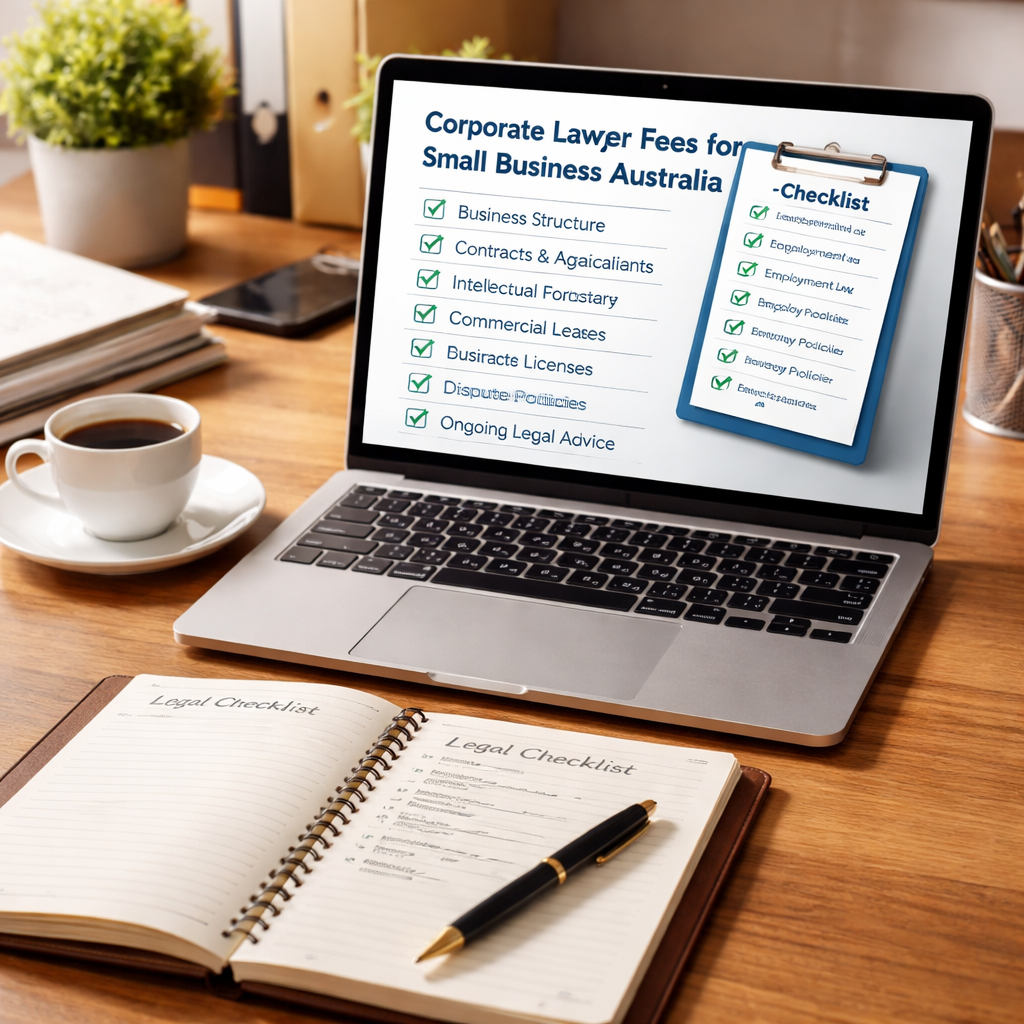
For more detail on the range of services small firms typically need, see Sprintlaw’s service guide. It walks you through each category with examples you can copy.
Step 2: How Fees Are Charged , Hourly, Fixed, and Hybrid
Now that you know what you need, it’s time to see how corporate lawyer fees for small business australia are actually billed.
Hourly billing is the most common model. The lawyer tracks minutes or fractions of an hour, then multiplies by their rate. You get an itemised invoice that shows exactly what was done. This model shines when the work is unpredictable, like negotiating a sudden dispute.
Fixed‑fee billing works like a menu price. The lawyer gives you a single number for a defined deliverable. You pay that amount whether the work takes one hour or ten. Fixed fees are great for standard tasks , company set‑up, contract drafting, trademark filing.
Hybrid billing blends both. A lawyer might charge a fixed fee for the core deliverable, then add hourly charges for any extra work that falls outside the agreed scope. For example, you could pay $2,500 to draft a shareholders’ agreement, and if you later need three extra amendment rounds, you pay $250 per hour for those.
Pros and cons of each model:
- Hourly: Transparent on time spent. Hard to forecast total cost.
- Fixed: Predictable budget. May exclude unexpected twists.
- Hybrid: Balance of predictability and flexibility. Needs clear scope definition.
How to decide?
- Ask yourself how defined the task is. If you can write a clear brief, fixed may work. \li>Check if you have a tight cash‑flow limit. Fixed or hybrid can protect you.\li>Consider the lawyer’s experience. Senior lawyers often favour hourly, while boutique firms may push fixed.\li>Ask for a written estimate that breaks down each part.
And always get the fee agreement in writing. A simple contract that says, “We will deliver X for $Y, plus any out‑of‑scope work at $Z per hour,” saves both sides from confusion later.
Step 3: Comparing Typical Fee Ranges for Small Businesses in Australia
When you compare corporate lawyer fees for small business australia, the numbers can look wild. Let’s put them into real ranges.
Hourly rates, according to Sprintlaw’s 2026 rate guide, sit roughly between $220 and $650 per hour for most corporate lawyers. Junior lawyers sit at the low end, senior partners at the high end.
Fixed‑fee packages are often advertised by firms that focus on startups. Allied Legal, for example, offers a “Business Structuring” package for around $2,300, covering company registration, basic shareholder agreement, and a first‑year compliance check. The same source says their “Contract Review” package starts at $1,200.
Here’s a quick snapshot:
| Service | Typical Fixed Fee (AUD) | Typical Hourly Rate (AUD) |
|---|---|---|
| Company registration | $2,000 – $3,500 | $250 – $450 |
| Shareholder agreement | $1,500 – $2,500 | $300 – $600 |
| Contract review (per 10 pages) | $800 – $1,400 | $200 – $500 |
| Intellectual property filing | $1,200 – $2,000 | $300 – $550 |
Why do these gaps exist? Hourly rates reflect the lawyer’s time, while fixed fees factor in the firm’s efficiency and the likelihood of a quick turnaround. Fixed fees often include the admin cost, so the price can feel higher up front but lower overall.
Let’s say you need a company set‑up and a basic shareholder agreement. If you go hourly and the work takes 12 hours at $300 per hour, you’ll pay $3,600. If you pick a fixed‑fee bundle that costs $4,500, you know the ceiling. Add a 10% discount for paying upfront, and you’re at $4,050 , still clear.
And here’s a visual cue to help you decide which model fits your cash flow:
When you watch the video, you’ll see a simple chart that matches task type to fee model. It’s a handy reference when you’re on a call with a lawyer.
Step 4: Tips for Choosing the Right Corporate Lawyer
Choosing the right lawyer is as important as knowing corporate lawyer fees for small business australia.
First, look for experience in your industry. A lawyer who has helped a tech start‑up understand equity splits will speak your language. Ask for case studies or examples , not the flashy marketing copy, but a real description of a similar client’s situation.
Second, check credentials. In Australia, a lawyer must hold a practising certificate from the relevant state bar. You can verify this on the law society’s website.
Third, test their communication style. Do they answer emails within a day? Do they explain terms without legalese? You want a partner who can break down complex ideas into plain words.
Fourth, consider fee transparency. Sprintlaw is the only firm in our sample that openly lists a fully fixed fee. That openness can save you time. But if a firm hides its rates, ask for a detailed quote before you sign any agreement.
Finally, see if they belong to professional bodies like the Australian Corporate Counsel (ACC). Membership shows a commitment to ongoing education. ACC’s eligibility page outlines what it means to be a member.
We at SDC Lawyers meet all these checks. We have years of corporate work, clear communication, and we tailor our fees to each client’s budget.
- Ask for a written scope of work.
- Verify practising certificates.
- Check for industry‑specific experience.
- Ask about fee models and get a side‑by‑side comparison.
- Look for ACC membership or similar.
Step 5: Negotiating and Managing Costs Effectively
Now that you know corporate lawyer fees for small business australia, let’s talk about keeping those fees in check.
Start by asking for a fixed‑fee quote for any well‑defined task. Even if the lawyer prefers hourly, they may be willing to cap the total cost once you give them a clear brief.
Second, negotiate the retainer amount. Some firms will accept a smaller retainer if you agree to a longer engagement. That can free up cash in the early months.
Third, set a budget ceiling in the engagement letter. Include language like, “If total fees exceed $X, we will pause work and seek your approval.” This protects you from surprise overruns.
Fourth, ask for regular billing updates. A monthly summary that shows hours logged and work completed helps you stay on top of spending.
Fifth, consider a “pay‑as‑you‑go” arrangement for low‑risk tasks. For example, a quick contract review can be billed at a flat $150 per hour with a maximum of two hours.
Here’s a quick checklist you can hand to any lawyer during the first call:
| Item | What to Ask |
|---|---|
| Fee Model | Hourly, fixed, or hybrid? Get a written quote. |
| Retainer | Amount required up front? Can it be reduced? |
| Scope Limits | What’s included? What’s extra? |
| Billing Frequency | Monthly, bi‑weekly, or upon completion? |
| Budget Cap | Is there a max spend clause? |
And remember, you can always ask for a discount if you bundle several services together. Many firms will shave 5‑10% off the total if you commit to a three‑month retainer.
We have used these tactics with our own clients and seen legal spend drop by up to 20% without sacrificing quality. The key is clear communication and written agreements.

FAQ
What factors affect corporate lawyer fees for small business australia?
Fees depend on the lawyer’s experience, the complexity of the task, the chosen billing model, and any disbursements like filing fees. Junior lawyers charge less per hour, while senior partners charge more. Fixed‑fee packages often include admin costs, making them a bit higher up front but easier to budget.
Are hourly rates the most common billing method?
Yes. Most firms in Australia still list an hourly rate as the base charge. However, many now offer fixed‑fee or hybrid options for standard services, especially for start‑ups that need cost certainty.
Can I get a free initial consultation?
Unfortunately, the two firms we studied did not list free‑initial‑consultations on their sites. It’s worth asking each lawyer directly , some may offer a brief 15‑minute call at no charge to scope your needs.
How do I know if a fixed‑fee quote is realistic?
Compare the quote to typical ranges we listed in the fee‑range table. If a fixed fee is far below market, ask what’s excluded. A realistic fixed fee should cover all work described in the scope‑of‑work document.
What is a retainer and do I need one?
A retainer is an upfront deposit that the lawyer draws against as they work. It protects the lawyer from non‑payment and gives you priority access. Small businesses often use a retainer for ongoing advice, but it’s not mandatory for one‑off projects.
How can I negotiate lower legal costs?
Ask for a fixed‑fee quote, bundle services, request a budget cap clause, and negotiate the retainer amount. Also, be clear about the scope to avoid extra hours. Many lawyers will discount if you commit to a longer engagement.
Conclusion
Understanding corporate lawyer fees for small business australia is the first step to getting solid legal help without breaking the bank. We’ve shown you how fees are built, how to map your needs, which billing models exist, typical price ranges, and how to pick and negotiate with a lawyer.
If you follow the steps we laid out, you’ll walk into any lawyer’s office with a clear brief, a realistic budget, and the confidence to ask the right questions. That’s how you protect your business and keep cash flow healthy.
Ready to take the next step? Reach out to us at SDC Lawyers. We’ll listen to your needs, give you a plain‑spoken quote, and guide you through every legal hurdle.