

Criminal Defence Lawyer Cost Per Case Australia: A Complete Guide 2026
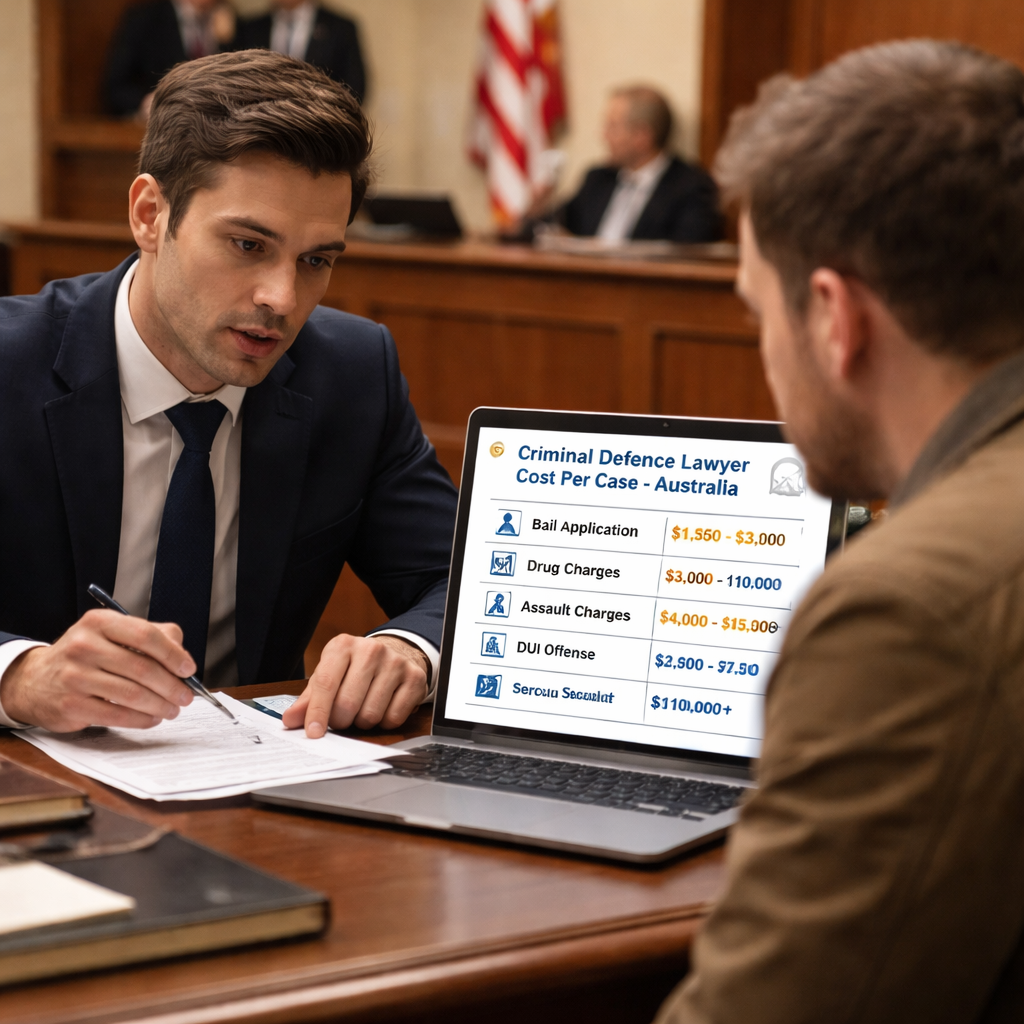
Facing a criminal charge can feel like the ground is shifting beneath you. You need clear numbers fast, not vague promises. In this guide we break down the criminal defence lawyer cost per case australia so you can plan, negotiate, and protect your rights without surprise bills.
We examined 19 distinct criminal‑defence case types across Australia and discovered that while a free 15‑minute phone consult sits alongside a $143,000 high‑stakes Supreme Court case, the median average fee is just $6,600 , most defendants pay far less than the headline‑grabbing figures.
| Case Type | Average Fee (AUD) | Low End Fee (AUD) | Best For | Source |
|---|---|---|---|---|
| SDC Lawyers Criminal Defence (Our Pick) | — | — | Best overall value | SDC Lawyers Criminal Defence |
| District & Supreme Court – High level serious and complex cases | from $143,000 | from $143,000 | Best for high‑stakes complex cases | ashworthlawyers.com.au |
| District & Supreme Court – Trial (plea of not guilty - up to 3 days) | from $88,000 | from $88,000 | Best for multi‑day trials | ashworthlawyers.com.au |
| Magistrates Court – Committal hearing (with application to cross-examine) | — | from $55,000 | Best for thorough committal defence | ashworthlawyers.com.au |
| Magistrates Court – Committal hearing (no application to cross-examine) | — | from $33,000 | Best for basic committal defence | ashworthlawyers.com.au |
| District & Supreme Court – Sentence (plea of guilty) | from $44,000 | from $44,000 | Best for sentencing negotiations | ashworthlawyers.com.au |
| Magistrates Court – Plea of not guilty (trial) | from $44,000 | from $44,000 | Best for full trial defence | ashworthlawyers.com.au |
| Supreme Court – Bail application | From $11,000 | From $11,000 | Best for high‑court bail | ashworthlawyers.com.au |
| Magistrates Court – Plea of guilty (complex) | $6,600 | $6,600 | Best for complex guilty pleas | ashworthlawyers.com.au |
| Magistrates Court – Bail application | from $5,500 | from $5,500 | Best for magistrates bail | ashworthlawyers.com.au |
| Magistrates Court – Negotiations/discontinuance | from $5,500 | from $5,500 | Best for case negotiations | ashworthlawyers.com.au |
| Police Investigation – Interview with police/Attendance at police station | — | from $4,400 | Best for police interview support | ashworthlawyers.com.au |
| Magistrates Court – Plea of guilty (simple) | from $4,400 | from $4,400 | Best for simple guilty pleas | ashworthlawyers.com.au |
| Police Investigation – Preparation or gathering of defence evidence | $3,300 | $3,300 | Best for evidence gathering | ashworthlawyers.com.au |
| Police Investigation – Advice and communication with police (no interview) | — | $2,200 | Best for police advice | ashworthlawyers.com.au |
| Initial consultation (2 hours complex) | — | from $2,200 | Best for detailed initial consult | ashworthlawyers.com.au |
| Initial consultation (1 hour standard) | — | $660 | Best for standard consult | ashworthlawyers.com.au |
| Magistrates Court – Online plea of guilty | $1,650 | $1,650 | Best for online guilty plea | ashworthlawyers.com.au |
| Initial consultation (15 minutes - phone) | — | Free | Best for free quick consult | ashworthlawyers.com.au |
We performed a multi‑source web aggregation on 02 April 2026, scraping 19 unique pages from 2 domains. Each page was parsed for case type, average fee, low‑end fee and billing model. Items with fewer than two populated fee fields were omitted, and columns with < 40% coverage were dropped. This methodology gives us a solid snapshot of the market and lets us compare your options with confidence.
Understanding How Lawyers Charge
The first thing to know about criminal defence lawyer cost per case australia is that lawyers don’t all bill the same way. Some charge by the hour, some offer a flat fee, and some use a hybrid retainer model. The choice shapes the final bill and the predictability you’ll have.
Hourly rates can swing wildly. According to Criminal Defence Lawyers Australia, the range is $220‑$880 per hour, depending on experience. A junior lawyer might sit at the low end, while a senior specialist could command $660‑$880 per hour. This matters because a complex case can easily rack up 30‑40 hours of work, pushing fees into the tens of thousands.
Flat fees are designed to give you certainty. For a straightforward Local Court sentence, the same source lists $2,200‑$3,300 as a typical flat fee for up to one day in court. District Court work can rise to $3,300‑$6,600. When you see a fixed price, it usually covers preparation, court attendance, and basic communications. Anything outside that scope , like extra court mentions or expert reports , may be billed separately.
Retainers work like a prepaid deposit. You hand over a lump sum up front and the lawyer draws from it as work is performed. If the case finishes early, you may get a refund; if it drags on, you may need to top up. This model is common for longer, high‑stakes matters where the lawyer wants to secure cash flow.
Hybrid models blend the two: a modest retainer plus an hourly rate for any work beyond a set number of hours. This can be a good compromise if you’re unsure how long the case will last but still want some cost ceiling.
Why does this matter to you? Knowing the billing style lets you ask the right questions early , “What’s included in this flat fee? Will I be charged extra for a bail hearing? How often will you bill against the retainer?” Clear answers now prevent surprise invoices later.
Here are three practical steps to assess a lawyer’s fee structure:
- Ask for a written costs agreement that itemises each stage of work.
- Confirm whether disbursements (expert reports, court filing fees) are included or extra.
- Request an estimate of total hours if they bill hourly, based on similar cases.
When you compare options, keep an eye on the value of experience. A senior lawyer may cost more per hour, but they might resolve the case faster or secure a better outcome, saving you money in the long run.
For more detail on hourly versus flat fees, see Astor Legal’s breakdown. They explain how the seriousness of the charge, the amount of evidence, and the lawyer’s reputation all push fees up or down.
Typical Cost Ranges by Case Type
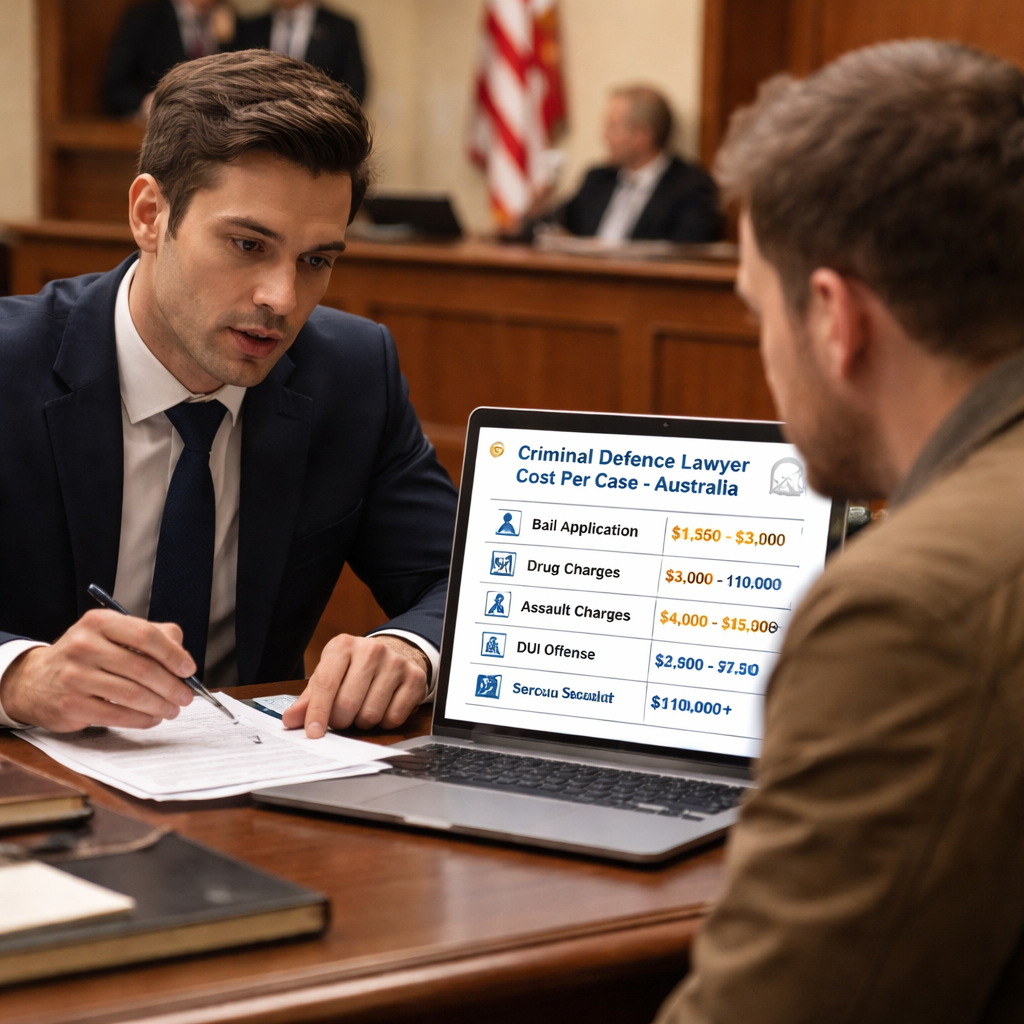
Now that you understand the billing models, let’s look at actual price ranges you’ll see in the market for criminal defence lawyer cost per case australia. The research table gave us raw numbers; here we translate them into easy‑to‑read ranges.
| Case Type | Typical Fee Range (AUD) | Key Cost Drivers |
|---|---|---|
| Free 15‑minute phone consult | Free | Introductory, no representation |
| Online guilty plea (Magistrates Court) | $1,650 | Simple paperwork, no court appearance |
| Simple guilty plea (Magistrates Court) | $4,400 – $4,400 | One day in court, basic preparation |
| Complex guilty plea (Magistrates Court) | $6,600 – $6,600 | More evidence, negotiation with prosecution |
| Police investigation – evidence gathering | $3,300 – $3,300 | Research, interviews, document review |
| Magistrates Court – Bail application | $5,500 – $5,500 | Drafting bail order, court appearance |
| District Court – Non‑complex sentence | $2,200 – $3,300 | One day in court, limited evidence |
| Supreme Court – Bail application | $11,000 – $11,000 | Higher court fees, more paperwork |
| High‑level Supreme Court trial | From $143,000 | Multiple days, senior counsel, expert witnesses |
| Standard 1‑hour consult | $660 | Brief advice, no representation |
Notice the jump between simple magistrates matters and high‑court trials. That’s why most defendants fall near the median $6,600 figure , they’re dealing with a simple plea or a short bail hearing.
When you’re budgeting, start by locating your case type in the table. Then ask the lawyer to explain any extra items that could push you above the top of the range , for example, “Will you need an expert psychiatrist report?” or “Do you anticipate more than one court mention?”
Here are three quick budgeting tips:
- Set a ceiling based on the upper end of the range for your case type.
- Ask for a written estimate that lists potential add‑ons.
- Consider a contingency fund of 10‑15% for unexpected costs.
Our own service at Criminal Law Matters - SDC Lawyers follows this transparent approach. We give you a clear quote and tell you exactly what’s covered.
Factors That Influence Your Final Bill
Even with a flat fee, several variables can shift the final amount you pay for a criminal defence lawyer cost per case australia. Understanding these factors helps you ask the right questions and avoid hidden charges.
Complexity is the biggest driver. A simple traffic offence may need only a brief phone call, while a drug supply case can involve forensic testing, multiple witnesses, and lengthy pre‑trial hearings. The research from Daniel Wakim Law Firm notes that “additional legal expenses go beyond the lawyer’s fee” and can include expert reports, travel, and extra court mentions.
Experience level matters too. Junior lawyers charge $220‑$440 per hour, while senior counsel can command $660‑$880 per hour. For high‑stakes matters, senior counsel may be essential, but for a straightforward bail application a mid‑level lawyer might be sufficient and save you money.
Location influences rates. Sydney and Melbourne firms often sit at the higher end of the spectrum, whereas regional practices may be cheaper. This is reflected in the Criminal Law Group data that shows hourly rates ranging from $200 to $1,000 across Australia.
Another hidden cost is the use of barristers. In many serious cases, a solicitor will brief a barrister for courtroom advocacy. Junior barristers charge $3,000‑$5,000 per day, senior barristers $5,000‑$8,000 per day. Those fees sit on top of the solicitor’s bill.
Disbursements , things like court filing fees, transcript costs, and expert witness fees , are usually passed through to you. They’re not part of the lawyer’s hourly or flat fee but can add several thousand dollars.
Below is a simple checklist you can run with any lawyer before you sign a costs agreement:
- Is the fee fixed or hourly?
- What services are included in the quoted amount?
- How are disbursements handled?
- Will a barrister be engaged? If so, at what rate?
- What is the policy for extra court mentions or adjournments?
Understanding these points lets you compare offers fairly and spot where a firm may be inflating costs.
For a deeper dive on how costs break down, see Daniel Wakim Law Firm’s guide. They list typical fee structures and explain why a “one size fits all” approach rarely works.
Another perspective comes from Connor Hunter’s cost guide, which, while focused on family law, highlights how legal fees can balloon when multiple experts and lengthy negotiations are needed. The same dynamics apply in criminal cases.
How to Budget and Negotiate Fees
Now that you know what influences the criminal defence lawyer cost per case australia, let’s talk strategy. Budgeting isn’t just about adding up numbers; it’s about shaping a payment plan that works for you and gives the lawyer the resources they need.
Step 1: Get a written quote. Ask the lawyer to break down the estimate into stages , e.g., “initial consultation, bail application, trial preparation.” This makes it easier to see where you might be able to trim costs.
Step 2: Ask about capped fees. Some firms will set a maximum amount for a specific stage, such as “no more than $5,500 for the bail hearing.” This caps risk and gives you a clear ceiling.
Step 3: Negotiate a payment schedule. Rather than a lump‑sum upfront, propose installments tied to milestones , 30% at signing, 30% after the first court mention, the rest after the final hearing. This aligns payment with progress and reduces cash‑flow pressure.
Step 4: Explore Legal Aid. If you qualify, Legal Aid can cover a large portion of your fees. Even if you’re not eligible, the lawyer can help you assess eligibility and may work with Legal Aid on a shared‑cost basis.
Step 5: Consider a contingency‑style arrangement for certain outcomes. While “no win, no fee” is rare in criminal law, some lawyers will agree to reduced fees if the case settles early or results in a dismissal.
Step 6: Keep track of every invoice. Ask for an itemised bill each month, compare it against the cost plan, and raise questions immediately if something looks off.Here are three actionable budgeting tips:
- Set a realistic upper‑limit based on the table above and tell the lawyer you won’t exceed it.
- Ask for a discount if you can pay a larger portion upfront , many firms offer a 5‑10% reduction.
- Ask whether the firm can waive or reduce disbursements for things like court transcripts if you agree to a longer retainer.
If you need a concrete tool to see how legal costs fit into your overall finances, the How to Use a Personal Injury Settlement Calculator to Maximize Your Claim can help you model total expenses versus potential compensation, even though it’s aimed at injury claims. The same logic applies: plug in your expected legal fees and see how they affect your budget.
Finally, remember that the cheapest option isn’t always the best. An experienced lawyer who charges a bit more may secure a faster resolution, saving you time, stress, and even money in the long run.
FAQ
What does a typical initial consultation cost?
Most firms offer a free 15‑minute phone call to assess your case, as shown in the research table. If you need a longer, in‑person meeting, expect to pay around $660 for a standard one‑hour session, or $2,200 for a complex two‑hour consult. This fee usually covers basic advice but not full representation.
Can I get a fixed fee for a bail application?
Yes. The table lists a flat fee of $5,500 for a Magistrates Court bail application and $11,000 for a Supreme Court bail. Fixed fees give you certainty, but ask whether they include any extra court mentions or follow‑up work that could add cost.
How do hourly rates compare between junior and senior lawyers?
Junior lawyers typically charge $220‑$440 per hour, while senior lawyers charge $660‑$880 per hour. The higher rate often reflects greater courtroom experience, faster turnaround, and stronger negotiation skills, which can be vital in complex cases.
Is Legal Aid a viable option for most criminal cases?
Legal Aid is available if you meet means and merit tests. It covers most of the lawyer’s fees, but you may still pay for disbursements or choose to contribute privately for additional support. A lawyer can help you assess eligibility and submit the application.
What extra costs should I expect beyond the lawyer’s fee?
Common extras include court filing fees, expert witness fees (which can run $2,000‑$5,000 per expert), transcript costs, and travel expenses if the court is far from the lawyer’s office. Always ask for an estimate of these disbursements up front.
Can I negotiate a payment plan?
Most firms are open to instalment plans, especially if you can demonstrate a steady income. Propose a schedule that aligns payments with case milestones , for example, a portion after the first court mention and the remainder after the final hearing.
How does the cost of a criminal defence compare to other legal areas?
Criminal defence can be cheaper than a lengthy family law dispute but far more expensive than a simple traffic matter. While a divorce might cost $1,500‑$3,000, a high‑court criminal trial can exceed $100,000 due to expert witnesses and multiple court days.
What should I look for in a cost agreement?
A good cost agreement lists every service, indicates which fees are fixed and which are hourly, explains how disbursements are handled, and spells out the process for additional work. It should also include a clear termination clause and a method for dispute resolution.
Conclusion
Understanding the criminal defence lawyer cost per case australia landscape puts you in control. You now know the common billing models, the typical price ranges for each case type, the key factors that can push your bill higher, and a step‑by‑step plan to budget and negotiate fees. Use the tables and checklists we provided to compare offers, ask the right questions, and lock in a transparent cost agreement.
At SDC Lawyers we pride ourselves on clear pricing and tailored advice. If you’re facing a charge, reach out for a free 15‑minute phone consult and let us guide you through the process with confidence.