

Domestic Violence Offences in NSW
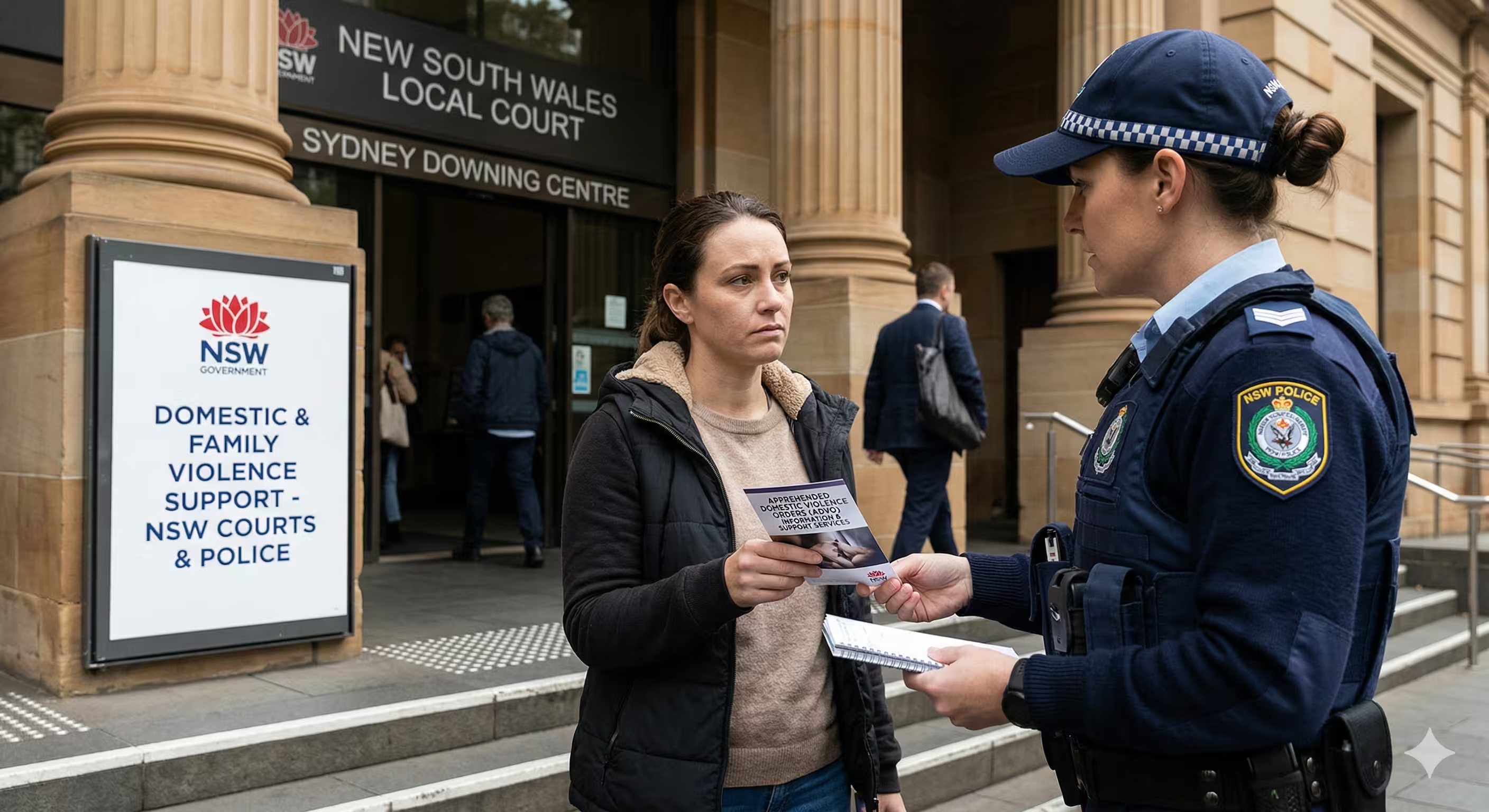
Domestic Violence Offences in NSW
Introduction
Domestic and family violence is treated with the utmost gravity by the NSW legal system. The Crimes (Domestic and Personal Violence) Act 2007 (CDPV Act) establishes the legal framework for Apprehended Domestic Violence Orders (ADVOs) and criminalises specific acts of abuse, stalking, and intimidation. The system prioritises victim safety, often resulting in immediate police intervention and exclusion of the alleged perpetrator from their home.
Apprehended Domestic Violence Orders (ADVOs)
An ADVO is a civil order made by the court to protect a person from future violence, intimidation, or harassment. It does not give the defendant a criminal record unless they breach it. There are two types:
- ADVO: Made between people who have a domestic relationship (spouses, de facto, relatives, carers).
- APVO (Apprehended Personal Violence Order): For non-domestic relationships (neighbours, co-workers).
Police Powers
Under the CDPV Act, police have the power to issue a Provisional ADVO at the scene of an incident. This order takes effect immediately and lasts until the court date. Police can also detain a person for up to 6 hours under Section 90D to issue a provisional order if they believe a domestic violence offence has occurred .
Criminal Offences Specific to DV
1. Stalking and Intimidation (Section 13)
It is a criminal offence to stalk or intimidate another person with the intention of causing fear of physical or mental harm. This includes:
- Following the person.
- Repeatedly sending unwanted messages or gifts.
- Damaging property.
- Intimidating conduct towards a pet.
Maximum penalty: Imprisonment for 5 years.
2. Breach of AVO (Section 14)
Breaching a condition of an ADVO is a criminal offence. This includes:
- Going near the protected person's house or work (contact condition).
- Attempting to communicate via phone or social media.
Maximum penalty: Imprisonment for 2 years and/or a fine of $5,500. For a second or subsequent breach, the maximum is 3 years imprisonment.
3. Coercive Control (New Legislation)
As of 2024, NSW has criminalised Coercive Control. This is a pattern of abusive behaviour over time (e.g., isolating the victim, controlling their finances, monitoring their movements, psychological manipulation). It carries a maximum penalty of 7 years imprisonment.
The Impact of an ADVO on the Defendant
Even without a criminal conviction, an ADVO has severe consequences:
- Firearms Licence: Automatic revocation; the defendant must surrender all firearms.
- Occupation: The ADVO may include an "exclusion order," forcing the defendant to move out of their own home.
- Parenting: Family Court judges view ADVOs as strong evidence of risk, heavily influencing parenting orders (custody).
Defences and Variation
Defences to the criminal charges (stalking, breach) include:
- Necessity: The contact was required for a legitimate reason (e.g., dropping off a child for school pick-up if no other arrangement existed, though this is risky).
- Lack of intention: The alleged stalking was coincidental or accidental.
The defendant can consent to the ADVO "without admissions." This means the order is made, but the defendant does not admit guilt. This is a common negotiation strategy to avoid a finding of fact. To vary or revoke an ADVO, the defendant must apply to the court. The protected person cannot simply "cancel" the order; the court must approve it.
Procedure at Court
- First Return Date: The court will try to facilitate a "Consent Order" (with or without admissions).
- Defended Hearing: If the matter is disputed, a hearing is held where the applicant and defendant give evidence.
- Final Order: If the court is satisfied on the balance of probabilities that the protected person fears violence and that fear is reasonable, it will make a Final ADVO, usually for 2 years.
References
- Crimes (Domestic and Personal Violence) Act 2007 (NSW) ss 13, 14, 90D.
- Crimes (Domestic and Personal Violence) Regulation 2025 .
- Bail and Other Legislation Amendment (Domestic Violence) Act 2024 No 30 .
- NSW Police Force. (2025). Domestic Violence Standard Operating Procedures.