

How to Apply for Australian Skilled Migration Visa – 2026 Step‑by‑Step Guide

Want to live and work in Australia? The skilled migration route is the fastest path for many professionals. In this guide you’ll learn how to apply for australian skilled migration visa from start to finish. We break down every step, give you check‑lists, and share tips you can use today.
Step 1: Check Your Eligibility
First thing you need to know is whether you meet the basic criteria for a skilled visa. The government only accepts workers who can fill a skill gap.
Key eligibility points include:
- Age under 45 at the time of invitation.
- Occupation listed on the skilled occupation list.
- Positive skills assessment from a recognised authority.
- Competent English language ability.
- Health and character standards met.
These rules are laid out on the Department of Home Affairs site. You can read more about the overall program here. It explains the difference between short‑stay, provisional and permanent visas.
Next, look at the points‑tested visa subclass. The Skilled Independent (subclass 189) is points based. You’ll need at least 65 points, but most invitations now start around 85 points.
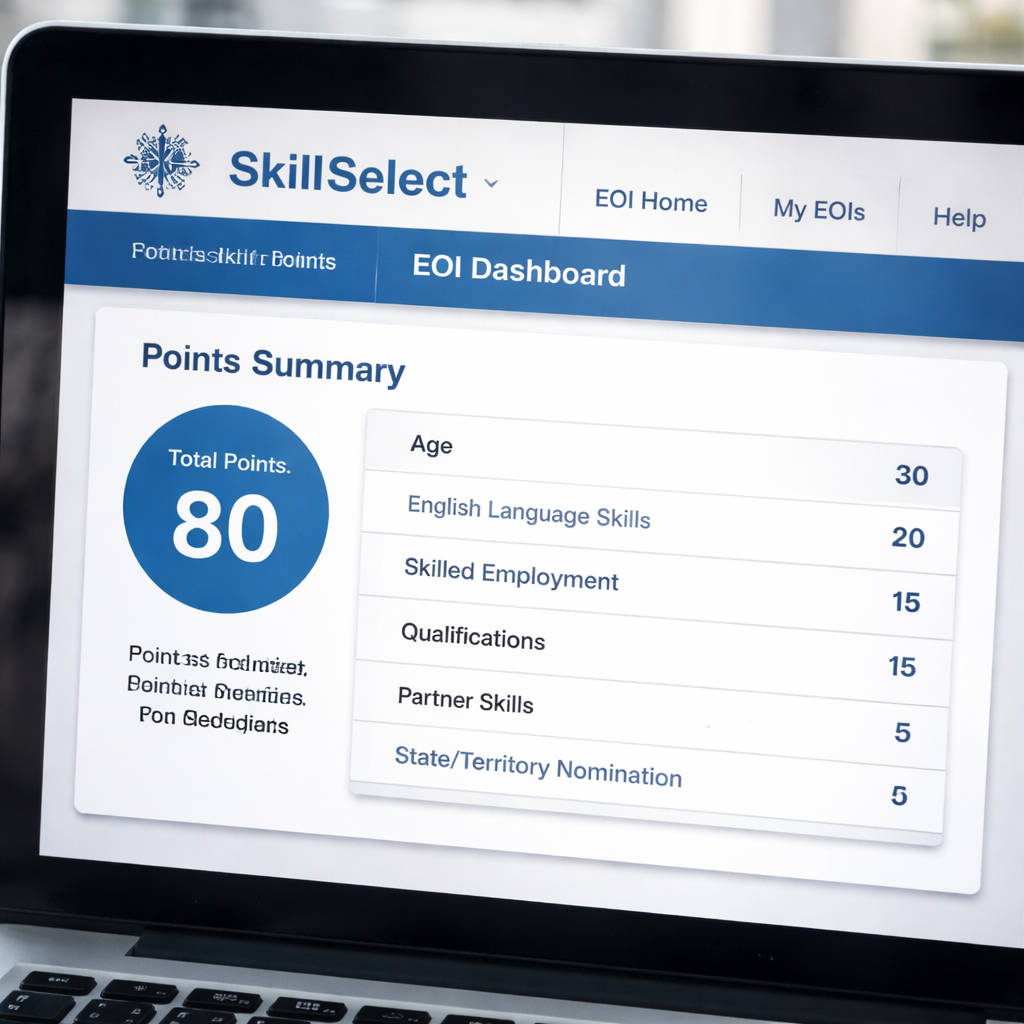
To work out your score, use the points calculator that the department provides. Points are awarded for age, English, work experience, education, and partner skills.
Tip: Keep a spreadsheet of your scores so you can see where you might add points, such as by improving your English or gaining extra work experience.
Also, check the specific visa page for details on fees and travel component. The 189 visa costs AUD 4,910 for the main applicant and includes a five‑year travel component here. Knowing the cost early helps you budget.
If you’re unsure whether you qualify, a registered migration agent can give you a quick assessment. Just be sure to read the advice on who can help before you pay anyone.
And remember, the eligibility rules change from time to time. The recent updates announced for July 2025 added higher points for regional work and tightened English scores. You can read about those changes here.
Below is a quick checklist you can print out:
- Age under 45?
- Occupation on SOL?
- Skills assessment obtained?
- English test result (IELTS ≥ 6.0) ready?
- Health and police checks cleared?
Mark each item as you gather evidence. If you miss any, you’ll need to fix it before moving on.

Step 2: Choose the Right Visa Subclass
Now that you know you’re eligible, pick the visa that fits your situation. The main subclasses are 189, 190, and 491.
Each subclass has its own pros and cons. Use the table below to compare them at a glance.
| Subclass | Need a Sponsor? | Points Bonus | Path to PR | Typical Processing |
|---|---|---|---|---|
| 189 | No | None | Direct permanent residence | 8‑12 months |
| 190 | State/Territory | +5 | Permanent residence after nomination | 9‑14 months |
| 491 | State/Territory (regional) | +5 | Provisional , convert to 191 after 3 years | 6‑10 months |
Think about where you want to live. If you’re open to any city, subclass 189 gives you freedom. If you’re okay with moving to a regional area, 491 can give you extra points and a faster invitation.
State‑nominated visas (190 and 491) require you to apply for nomination first. Each state publishes its own list of in‑demand occupations. Check the latest lists on the migration lawyers site here. They also explain which occupations are hot in 2026.
Watch this short video for a visual walk‑through of the subclass differences:
And here’s a quick tip: if your partner also has a skilled job, include them as the primary applicant. That can add partner points and boost your overall score.
- List your occupation and see which subclass matches best.
- Check state nomination deadlines , they often close early in the year.
- Consider regional living if you want the extra points from subclass 491.
When you’ve decided, move to the next step: gathering documents.
Step 3: Gather Required Documents
Having the right paperwork ready will save you weeks of waiting. The department provides a document checklist tool that tells you exactly what to attach.
You’ll need:
- Passport copy.
- Certified birth certificate or ID.
- Positive skills assessment.
- English test results (IELTS, PTE, or TOEFL).
- Evidence of work experience , payslips, contracts, reference letters.
- Health insurance (OSHC) details if you’re on a student pathway.
- Financial proof , bank statements or sponsor letters.
- Police certificates for every country you’ve lived in 12 months or more in the last 10 years.
Read the official checklist here. It explains how to certify copies and which forms need signatures.
Make sure every document is in English or has a certified translation. The department rejects applications with unreadable scans.
Tip: Create a folder for each document type and name files clearly, e.g., "Passport_MainApplicant.pdf". This keeps your ImmiAccount upload tidy.
While you collect evidence, start drafting answers for the Genuine Student (GS) requirement if you have a student background. Keep each answer under 150 words and focus on why you truly want to study and work in Australia.
Also, if you have a partner, gather their identity documents and any evidence of a genuine relationship , marriage certificate, joint bills, or a shared lease.
When you’re ready, you’ll submit an Expression of Interest via SkillSelect.
For a deeper dive into the EOI process, see the department’s guide here. It explains how points are calculated and how the system ranks you.
Step 4: Submit Your Expression of Interest via SkillSelect
SkillSelect is the online portal where you tell the government you want a skilled visa. You’ll fill out a form with personal, education, and work details.
When you save your EOI, the system gives you an indicative points score. It also shows which visa subclasses you’re eligible for based on your answers.
Important: you can only have one active EOI at a time. If you need to update information, you must withdraw the old one and create a new one.
After you submit, you’ll sit in a pool of other applicants. Invitations are issued regularly. The higher your points, the better your chances.
Here’s how to boost your ranking while you wait:
- Improve English , retake IELTS for a higher band.
- Gain additional work experience in your nominated occupation.
- Apply for a state nomination to add five points.
- Consider a regional study or work stint for extra points.
Once you receive an invitation, you have 60 days to lodge a full visa application.
Remember to keep your ImmiAccount details secure , you’ll need the same login to submit the final application.
Step 5: Wait for Invitation and Apply for the Visa
After your EOI is in the pool, the waiting game begins. Processing times vary, but the department publishes median times you can check.
Current median times for subclass 189 are about 8‑12 months. You can view the latest figures here. Knowing the timeline helps you plan finances and job searches.
If you get an invitation, you’ll receive an email with a link to lodge your application. You must upload all the documents you gathered in Step 3.
Key steps after invitation:
- Log in to ImmiAccount and click the invitation link.
- Complete the visa application form , double‑check every field.
- Pay the visa application charge (AUD 4,910 plus any second instalment).
- Upload certified copies of all required documents.
- Submit and wait for a decision.
During processing, the department may ask for more information. Respond quickly to avoid delays.
If you’re approved, you become a permanent resident on the day the visa is granted. You’ll receive a digital visa record linked to your passport.
After three years of living in a regional area on a 491 visa, you can apply for subclass 191 to become permanent. The migration lawyers site explains this pathway here. It’s useful if you started with a regional visa.
Tip: Keep a folder of all correspondence with the department. Dates, reference numbers, and screenshots can be handy if you need to follow up.
Finally, plan your arrival. Book health insurance, arrange accommodation, and look for job listings before you land.
Conclusion
Applying for australian skilled migration visa is a multi‑step process, but each step is clear if you follow a plan. First, check eligibility and calculate points. Then pick the subclass that matches your life goals. Gather every document early, submit a solid EOI, and wait for that invitation. When it arrives, act fast, upload clean files, and pay the fees.
With the right preparation you can avoid common pitfalls like missing documents or low English scores. The journey may take months, but the reward , permanent residence, work rights, and the chance to call Australia home , is well worth it.
If you feel stuck at any point, consider a brief consult with a registered migration agent. They can help you fine‑tune your points and ensure your paperwork meets the department’s strict standards.
Ready to start? Open an ImmiAccount today, run the points calculator, and take the first step toward a new life down under.
Frequently Asked Questions
What is the minimum points score to be invited for a skilled visa?
The base threshold is 65 points, but most invitations in 2026 start around 85 points because of high competition. Use the official points calculator to see where you stand and aim to add points through English, work experience, or state nomination.
Can I apply for a skilled visa if I am over 45?
You can still apply if you are under 45 at the time of invitation. If you turn 45 after submitting your EOI but before receiving an invitation, you remain eligible. However, once you turn 45 before the invitation, you lose eligibility for points‑tested visas.
Do I need a job offer before I submit my EOI?
No job offer is required for subclass 189. For subclass 190 or 491, a state or regional nomination can replace the need for an employer sponsor, though having a job offer can boost your points if you claim employer‑sponsored points.
How long does the visa processing take after I submit my application?
Median processing times for the 189 visa are 8‑12 months, according to the department’s latest data. Processing times can vary based on document completeness, health checks, and the current workload.
What health insurance do I need for a skilled migration visa?
You do not need Overseas Student Health Cover for a skilled migration visa, but you must meet health requirements. This means completing a medical exam and providing the results to the department as part of your application.
Can my family join me on the skilled migration visa?
Yes. You can include your partner, de‑facto partner, and dependent children in your application. They must also meet health and character requirements, and you’ll need to provide supporting documents like marriage certificates and birth certificates.
What happens if my application is refused?
A refusal will include a reason. You can address the issue and lodge a new application, but you may need to wait for a cooling‑off period if the refusal relates to PIC 4020 issues. Consulting a migration agent can help you understand the next steps.
Do I need to pay a second instalment fee?
The second instalment applies only if you have functional English but not competent English, or if you include family members who need the extra charge. The fee is listed in the visa pricing estimator on the department’s site.