

10 Common Partner Visa Refusal Reasons
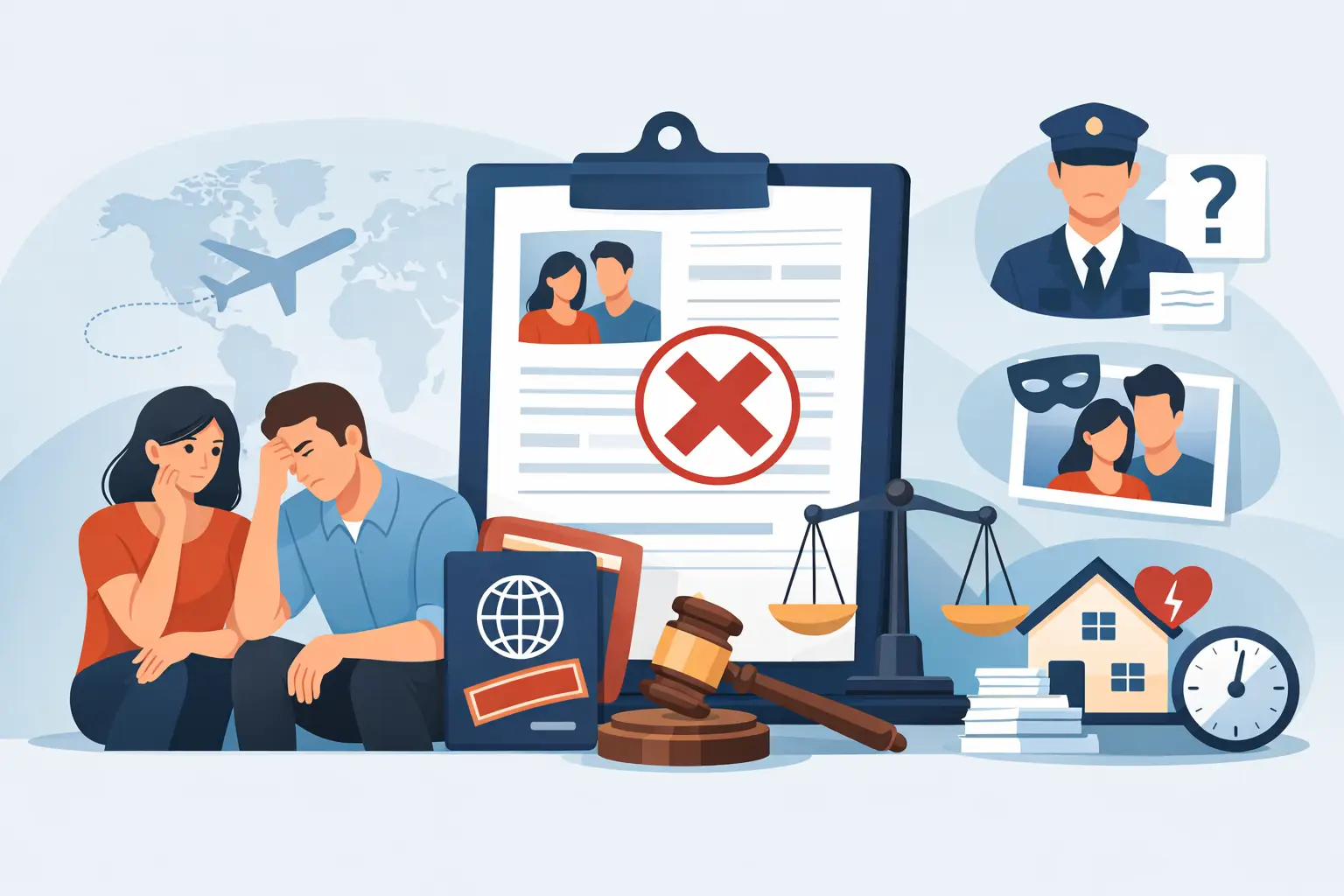
A partner visa refusal rarely comes down to one small mistake. More often, it happens because the Department is not satisfied that the relationship is genuine, the evidence is inconsistent, or a legal issue has not been addressed properly. When couples have already invested time, money and emotion into an application, a refusal can feel devastating. It can also place real pressure on a relationship, especially where one partner’s ability to remain in Australia is at stake.
Understanding the main partner visa refusal reasons can help you avoid preventable problems before you lodge. It can also help you see where a refused application may still be challenged, strengthened or reworked with the right legal support.
Why partner visa refusals happen
Australian partner visas are evidence-heavy applications. It is not enough to say you are married or in a committed relationship. The Department wants to see that the relationship is genuine and continuing, and that the couple share a life together in a practical, social and emotional sense.
That sounds straightforward, but many refusals happen because applicants assume the relationship itself will speak for them. It will not. The decision-maker assesses documents, statements, dates, travel history, financial records and any inconsistencies across the application. If those materials do not clearly support the legal criteria, the application can be refused even where the relationship is real.
In some cases, the issue is not the relationship at all. Character concerns, sponsor eligibility problems, incorrect answers, missing deadlines or weak responses to Department requests can also lead to refusal.
10 common partner visa refusal reasons
1. The Department is not satisfied the relationship is genuine
This is one of the most common partner visa refusal reasons. The Department looks at the full picture of the relationship, including financial arrangements, living arrangements, social recognition and commitment to a shared future. If the evidence is thin, vague or contradictory, the application may fail.
A marriage certificate alone is rarely enough. Neither are a few photos and short personal statements. Decision-makers usually expect to see a broader pattern of shared life, not just formal proof that a relationship exists on paper.
2. Inconsistent information across forms and evidence
Small inconsistencies can create bigger problems than many applicants expect. If one partner says you started living together in March and the other says May, that may be explainable. But if there are multiple mismatched details about addresses, timelines, travel, finances or the history of the relationship, concerns quickly build.
This does not always mean the Department believes the relationship is fake. Sometimes it simply means the application has not been prepared carefully enough. Still, inconsistency can damage credibility.
3. Not enough evidence of living together or explaining separation
Cohabitation is not mandatory in every circumstance, but it is a major factor. Where a couple does not live together, the Department will usually want a clear and credible explanation. Work commitments, cultural factors, visa restrictions or family responsibilities may explain separate residences, but those reasons should be supported with evidence.
If there are long periods apart, especially across different countries, applicants should not leave the Department to guess why. The stronger approach is to explain the situation directly and show how the relationship continued despite the distance.
4. Weak financial evidence
Shared finances are another key area. This does not mean every couple must have a joint bank account from day one. Real relationships operate in different ways. But if there is no evidence of shared expenses, financial support or plans for financial interdependence, the application may look underdeveloped.
Rent payments, bills, transfers, joint purchases, insurance, travel bookings and evidence of one partner supporting the other can all help. The point is not to force a particular financial model. It is to show that your financial life reflects a real partnership.
5. Social evidence does not support the relationship
The Department also considers whether friends, family and the wider community recognise the relationship. If there is very little social evidence, that can raise concerns.
Photos over time, invitations, messages, travel with family, statutory declarations from people who know the couple, and evidence of attending events together can all be relevant. This is especially important where a relationship is relatively new, where there are cultural sensitivities, or where the couple has spent periods apart.
6. Problems with the sponsor’s eligibility
Sometimes the applicant is not the main issue. The sponsoring partner must also meet legal requirements. A sponsor may face problems if they have sponsored previous partners in restricted periods, have certain character concerns, or are otherwise not eligible to sponsor.
This area is often overlooked because couples focus on the visa applicant. But a strong application depends on both sides being prepared properly.
7. Character issues or police concerns
Character matters can affect partner visa outcomes. Serious criminal history, domestic violence concerns, or failing to disclose police matters can create significant problems. In some cases, the issue affects the applicant. In others, it affects the sponsor.
Not every character issue leads to refusal. It depends on the nature of the conduct, when it occurred, what was disclosed, and how the legal criteria apply. What matters most is not trying to minimise or hide the issue. If there is a concern, it should be addressed properly from the outset.
8. Incorrect or misleading information
Applications can unravel quickly when information is incomplete, inaccurate or misleading. Sometimes this happens deliberately. Often, it happens because applicants rush forms, rely on assumptions, or copy old details from earlier visa applications.
Even an innocent mistake can trigger serious concerns if it affects a material fact. Previous relationship history, children, address records, work details and immigration history all need to be accurate. If the Department believes false or misleading information has been provided, the consequences can extend well beyond one refusal.
9. Failing to respond properly to a request for more information
If the Department asks for further documents or clarification, that request should be taken seriously. A late, incomplete or poorly prepared response can leave key concerns unresolved.
This is often where manageable issues become refusal issues. A request from the Department is not just administrative paperwork. It is usually a sign that the decision-maker sees a gap, inconsistency or legal problem that needs attention. The response should be clear, supported and tailored to the exact concern raised.
10. Timing and eligibility problems at lodgement
Some partner visa refusals happen because the application was not validly or properly lodged in the first place, or because a key eligibility requirement was not met at the time of application. This can include issues around visa status, location at lodgement, relationship status, or de facto evidence requirements.
Timing matters. A couple may have a genuine relationship, but if they apply too early or without the required foundation evidence, the application can still fail. This is one reason legal advice before lodgement can make a real difference.
How to reduce the risk of refusal
The strongest applications tell a consistent, evidence-backed story. They do not overwhelm the Department with random paperwork, but they do cover the main aspects of the relationship clearly and honestly. Quality matters as much as quantity.
It also helps to think like a decision-maker. If a stranger reviewed your file, would they understand how the relationship began, how it developed, how you manage daily life, and why the evidence supports your claims? If there are unusual features, such as long-distance periods, cultural barriers, prior visa issues or a short courtship, those matters should be explained rather than avoided.
Legal advice is particularly useful where the case is not straightforward. That includes situations involving previous refusals, sponsorship concerns, children from earlier relationships, character issues, or gaps in documentary evidence. In those matters, the right strategy is not always obvious, and generic advice can do more harm than good.
If your partner visa has already been refused
A refusal does not always mean the end of the road. Depending on the circumstances, there may be review rights, or there may be options to prepare a stronger application in the future. The best path depends on why the refusal occurred, what the decision says, and whether the legal error is factual, evidentiary or procedural.
This is where people often lose time by reacting emotionally rather than strategically. It is understandable to feel shocked or frustrated, but the refusal notice needs careful review. Deadlines can be strict, and the reasons given by the Department will usually shape what should happen next.
At that stage, broad online checklists are rarely enough. A tailored legal assessment can help identify whether the refusal was based on weak evidence, a misunderstanding, an eligibility barrier or an issue that requires a different approach altogether. For couples in Sydney dealing with a complex partner visa matter, support from an experienced immigration lawyer can provide clarity when the situation feels uncertain.
A partner visa application is not just paperwork. It is a legal case built around your relationship, your evidence and your credibility. The more carefully that case is prepared, the better your chances of giving the Department a clear reason to say yes.