

Sentence and Conviction Appeals in NSW
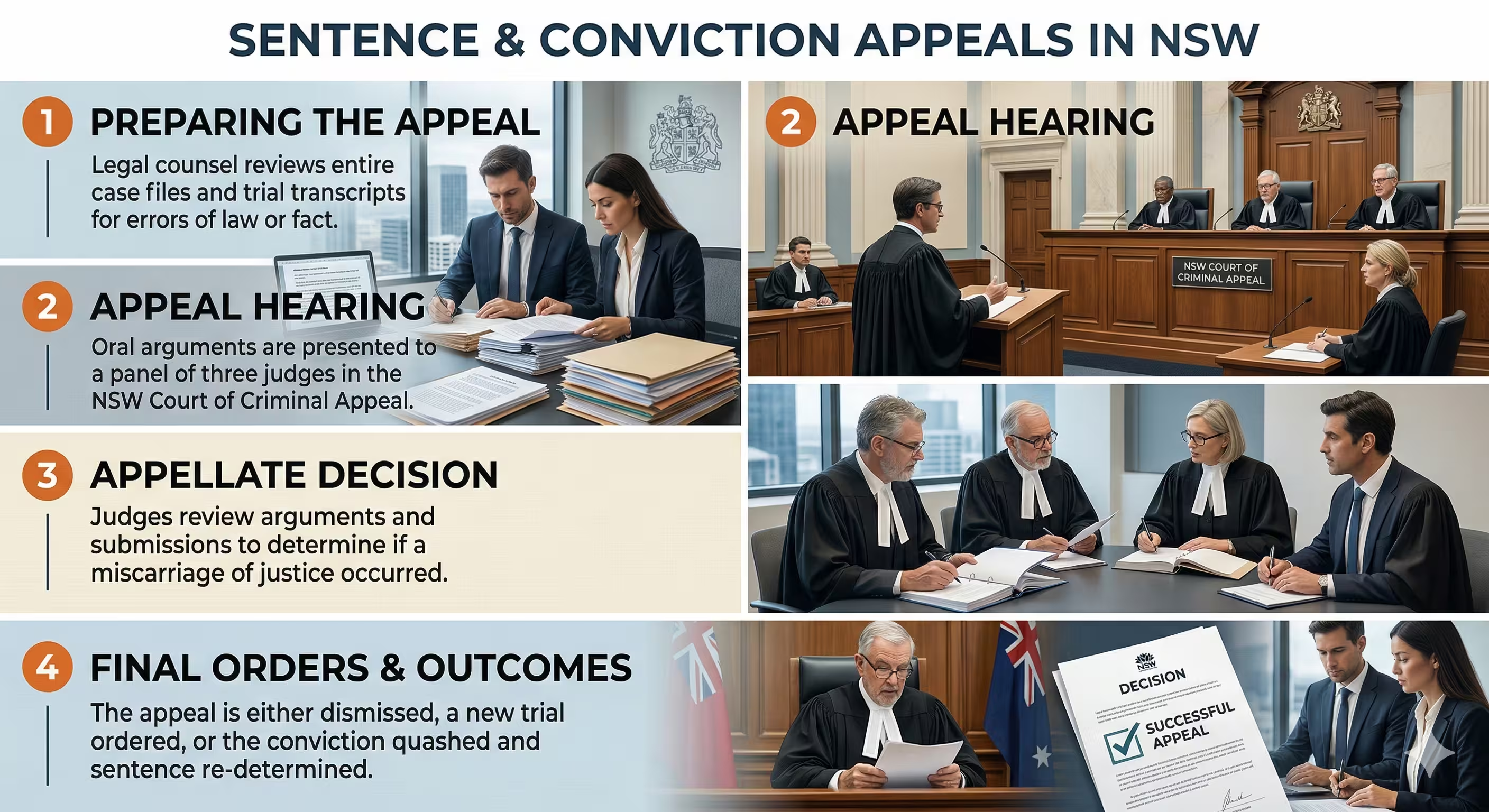
Sentence and Conviction Appeals in NSW
Introduction
The right to appeal is a fundamental safeguard of the criminal justice system. In New South Wales, the process for appealing a conviction or sentence is governed primarily by the Criminal Appeal Act 1912 and the Crimes (Appeal and Review) Act 2001. Understanding the distinction between an appeal against a conviction (guilt) and an appeal against a sentence (penalty) is critical for any defendant.
Jurisdiction and Hierarchy
Local Court Appeals
Appeals from the Local Court are heard by the District Court of NSW.
- Conviction Appeals: This is a re-hearing. The District Court judge reconsiders the evidence presented in the Local Court (and may hear new evidence) to determine if the magistrate made an error.
- Sentence Appeals: The appellant can argue the penalty was "manifestly excessive."
Higher Court Appeals
Appeals from the District or Supreme Court (trials) go to the NSW Court of Criminal Appeal (CCA). The CCA is a purely appellate court; it does not rehear witnesses.
Grounds for Appeal
1. Conviction Appeal
To succeed in a conviction appeal, the appellant must generally show:
- Error of law: The trial judge misdirected the jury on the legal definition of the crime.
- Unreasonable verdict: The jury’s verdict was against the weight of the evidence.
- Fresh evidence: New evidence has emerged that was not available at the trial and is credible.
- Miscarriage of justice: Procedural unfairness occurred (e.g., biased judge, incompetent counsel).
2. Sentence Appeal
The appellant must show that the sentencing judge:
- Made a specific error in calculating the sentence (e.g., miscalculating time served).
- Took into account irrelevant factors or ignored relevant mitigating factors.
- Imposed a sentence that is "manifestly excessive" (i.e., it falls outside the range of sentences appropriate for that crime).
Crown Appeals
The Director of Public Prosecutions (DPP) can also appeal a sentence if they believe it is "manifestly inadequate" (too lenient). This is a significant risk for an offender who has already received a light sentence; a successful Crown appeal can result in a harsher penalty in the CCA.
Procedure and Time Limits
Strict time limits apply:
- Conviction Appeal: Notice of intention to appeal must generally be lodged within 28 days of conviction or sentence.
- Sentence Appeal: Usually 28 days.
Failure to meet these deadlines requires an application for an extension of time, which is difficult to obtain.
The "Arithon" Rule
If a judge makes an error in sentencing that benefits the prisoner (e.g., miscalculating a parole date), the Crown may not be able to appeal that specific error if it is deemed a "slip" in arithmetic, but they can appeal the overall inadequacy.
Powers of the Court of Criminal Appeal
Under Section 6 of the Criminal Appeal Act 1912, the CCA has broad powers:
- Dismiss the appeal (uphold the conviction).
- Allow the appeal, quash the conviction, and order a new trial.
- Enter a verdict of acquittal (if the evidence was too weak to sustain a conviction).
- Vary the sentence (reduce it, or increase it if the Crown appeals).
Recent Trends
The CCA has recently shown a willingness to reduce sentences for offenders where "Bugmy" factors (profound childhood deprivation) or mental health conditions were not given sufficient weight in the lower court. Conversely, sentences for "one-punch" assaults and domestic violence offences have consistently been upheld or increased due to community deterrence.
Practical Tips for Appellants
- Do not self-represent: Appeals are highly technical.
- Secure transcripts: The appeal relies entirely on the transcript of the original trial.
- Legal Aid: Legal Aid NSW may cover appeals, but only if there are reasonable prospects of success.
References
- Criminal Appeal Act 1912 (NSW).
- Crimes (Appeal and Review) Act 2001 (NSW).
- Bugmy v The Queen (2013) 249 CLR 571.
- Judicial Commission of NSW. (2024). Criminal Trial Courts Bench Book.