

Visa Delay Reasons: What May Be Holding Up Your Case
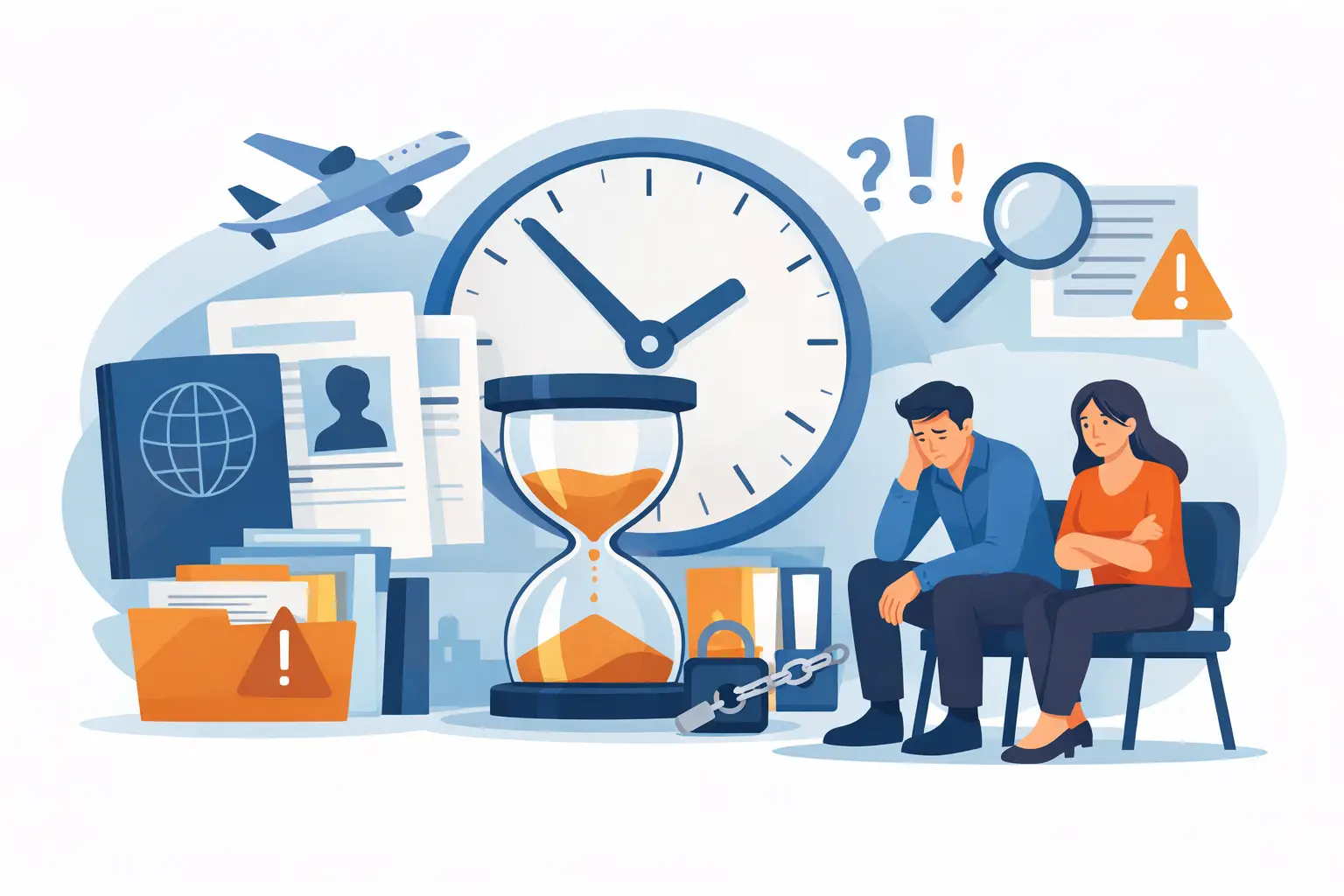
A visa application can feel stuck long before it is formally refused. For applicants planning a move, reunion with family, work opportunity or permanent future in Australia, uncertainty is often the hardest part. Understanding the common visa delay reasons can help you respond appropriately, avoid creating further issues and recognise when tailored immigration advice may be needed.
A delay does not automatically mean there is a problem with your application. The Department of Home Affairs assesses every matter on its own facts, and processing priorities, required checks and the quality of the material provided can all affect timing. What matters is knowing which delays are outside your control and which ones may be addressed through careful action.
Common visa delay reasons in Australia
High application volumes and processing priorities
The Department receives large numbers of visa applications across many categories. Demand can rise sharply at particular times of year, including before university intakes, holiday periods and changes to migration settings. This can affect applications even where every required document has been provided.
Applications are also processed according to government priorities. A matter may take longer where the Department is managing a large caseload, focusing resources on another visa programme, or waiting for places within a capped or planned migration stream. These delays can be frustrating, but repeated enquiries generally will not move an application ahead of others unless there is a genuine reason for urgent consideration.
Missing, unclear or inconsistent documents
Incomplete documentation is one of the most preventable causes of delay. A case officer may need more information where identity documents, relationship evidence, employment records, financial material, health documents or police certificates are missing, expired or difficult to verify.
Inconsistencies can be just as significant as omissions. For example, dates in a personal statement that do not align with travel records, an unexplained change of address, or different information across forms and supporting letters may lead to further questions. A request for more information is an opportunity to clarify the position fully, not simply provide the shortest possible response.
Documents in a language other than English must generally be accompanied by an appropriate English translation. Poor-quality scans, incomplete pages and uncertified documents where certification is required can also slow assessment. Before lodging, it is sensible to check that every document is legible, current and directly supports the claims made in the application.
Health and character checks
Many applicants must satisfy health and character requirements. These checks protect the Australian community, but they can take time, particularly where the Department needs to obtain information from overseas authorities or assess complex medical circumstances.
Health delays may arise if further tests, specialist reports or medical examinations are requested. Character checks can take longer where an applicant has lived in several countries, has a criminal history, has previously had a visa cancelled or refused, or has details that require clarification. These issues do not always result in refusal, but they require accurate disclosure and considered evidence.
It is never wise to leave out a past charge, conviction, visa issue or medical condition because it seems minor or occurred many years ago. Non-disclosure can become a more serious issue than the underlying event. Early legal advice can be particularly valuable where health or character matters are involved.
Further verification of relationships, employment or business claims
Some applications require the Department to assess whether a claimed relationship, job, qualification or business activity is genuine. This can occur in partner, family, student, skilled, employer-sponsored and business-related visa matters.
For a partner visa, an officer may look beyond photographs and messages to the practical reality of a shared life. Joint financial commitments, living arrangements, social recognition of the relationship and future plans may all be relevant. For employment-related visas, the Department may verify the employer's business operations, the position offered, the applicant's work history, qualifications and salary arrangements.
Verification is not an accusation of wrongdoing. However, vague statements or evidence created only for the application can prompt closer review. Strong applications present a coherent account supported by genuine, contemporaneous material.
Changes in your circumstances
A change after lodgement can affect processing and must sometimes be reported to the Department. Common examples include a new passport, marriage or separation, the birth of a child, a change in address, a new criminal charge, altered employment or a change in study arrangements.
Failing to notify the Department may lead to correspondence going unanswered or important facts being assessed incorrectly. On the other hand, providing frequent updates that are not relevant can make a file harder to follow. The appropriate approach depends on the visa type and the nature of the change.
Security, identity and external agency checks
Certain applications require checks involving other Australian government bodies or overseas agencies. Identity, security and information-sharing checks may not be visible to the applicant, and the Department may be unable to provide detailed updates while they are underway.
These checks can be prolonged when names are common, identity documents have changed, travel history is extensive or records from another country are difficult to access. Applicants should be cautious about relying on online processing estimates as a promise of an outcome date. They are useful guides, not guarantees.
What to do when your visa is delayed
The first step is to confirm the status of your application and review all correspondence carefully. A request for more information may have a strict deadline. Missing it can result in a decision being made on the available material, which may place the application at risk.
Keep your contact details current and monitor the email address used for the application, including junk mail. If you hold a bridging visa, check its conditions rather than assuming you can work, travel or study under the same conditions as your previous visa. Travel outside Australia can have serious consequences if you do not hold the right bridging visa or other permission to return.
Where a request is made, answer the specific questions asked and provide organised evidence. A clear covering explanation can help connect the documents to the issue being considered. Do not alter records, manufacture evidence or provide information that is inaccurate. These actions can lead to refusal, cancellation issues and potential future consequences.
If the application is outside normal processing timeframes, an enquiry may be appropriate. However, there is a practical trade-off: routine status enquiries rarely produce a substantive update, while a well-supported request based on compelling circumstances may be more useful. Serious illness, family separation involving children, urgent employment needs or other exceptional circumstances may warrant a carefully prepared request for priority consideration, though priority is never assured.
When a delayed visa needs legal attention
Professional advice is worth considering where the delay follows a request for information, a notice raising concerns, an interview request, a health or character issue, or a previous visa refusal or cancellation. It can also help where a relationship has broken down, an employer's circumstances have changed, or you are concerned that information in the original application was incorrect or incomplete.
An immigration lawyer can review the application as a whole, identify gaps in the evidence and advise on any response before it is sent. This is different from simply asking for an update. The focus should be on protecting your legal position and presenting the facts accurately.
At SDC Lawyers, our immigration team provides practical, tailored advice for people facing visa uncertainty in Sydney and surrounding communities. The right next step will depend on your visa type, current status and the reason the Department needs more time.
Waiting for a visa decision can place work, family and future plans on hold. Staying organised, responding honestly and seeking advice early when concerns arise can give you greater confidence while the process continues.