

When to Hire a Business Contract Review Lawyer
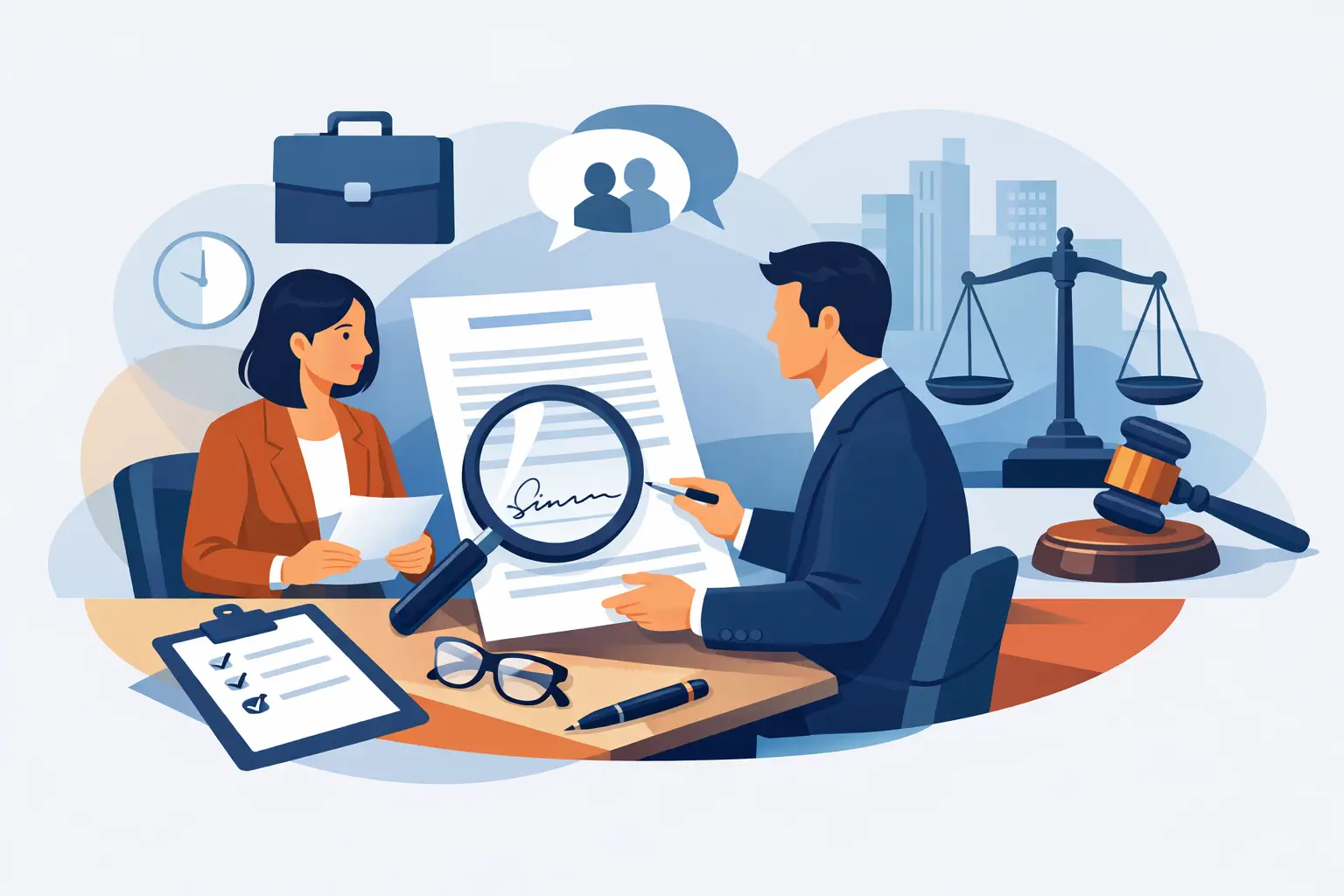
A contract can look straightforward right up until a late payment, disputed scope, or surprise liability turns it into a problem. That is usually the point when business owners wish they had spoken to a business contract review lawyer before signing. Whether you are taking on a new supplier, entering a commercial lease, hiring contractors, or agreeing to a sale, the wording matters far more than many people expect.
For small and medium-sized businesses, contract review is not about slowing deals down or making things harder. It is about understanding what you are actually agreeing to, where the risk sits, and whether the terms reflect the commercial reality of the arrangement. A well-reviewed contract can prevent disputes, protect cash flow, and give you more certainty if something goes wrong.
What a business contract review lawyer actually does
A business contract review lawyer does more than check for spelling mistakes or obvious legal issues. The role is to assess whether the agreement protects your interests, accurately reflects the deal you think you made, and exposes you to avoidable risk.
That includes looking closely at payment terms, termination rights, indemnities, limitation of liability clauses, restraint provisions, default triggers, dispute resolution clauses, and any obligations that may be difficult or expensive to meet. In many cases, the biggest issues are not hidden in dense legal language. They are sitting in plain sight, but they have not been tested against real business circumstances.
For example, a contract may say payment is due within 30 days, but it may also give the other party broad rights to withhold payment for vague reasons. A supply agreement may appear commercially attractive, yet lock you into minimum purchase commitments that no longer make sense in six months. A lease may seem standard, but contain repair, outgoings, or make-good obligations far more costly than expected.
Legal review helps identify those issues early, while there is still room to negotiate.
Why contract review matters before you sign
Once a contract is signed, your options usually narrow. You may still be able to negotiate changes later, but your leverage is often reduced, especially if the other party can point to the signed terms and insist on compliance.
That is why early review matters. It gives you the chance to ask practical questions. Does this contract let you exit if the relationship stops working? Are the deliverables clearly defined? Who carries the risk if there is a delay, defect, cyber incident, or regulatory issue? If there is a dispute, where and how will it be resolved?
Many business owners assume a standard form agreement is non-negotiable. Sometimes that is true in parts, particularly when dealing with larger organisations. But often there is more flexibility than expected, especially where a clause is unreasonable, unclear, or commercially unbalanced. Even if the other side will not amend every issue, knowing the risks allows you to make an informed decision.
Contracts that most often need legal review
Not every agreement requires the same level of attention. A simple low-value arrangement may only need a quick check. A long-term or high-risk contract deserves a more detailed review.
The agreements that commonly benefit from legal review include supplier and service contracts, partnership or shareholder agreements, distribution agreements, commercial leases, franchise documents, contractor agreements, confidentiality agreements, software and technology contracts, and sale of business agreements.
Employment contracts can also raise business risk, particularly where senior staff, intellectual property, confidential information, or post-employment restraints are involved. In those situations, a narrowly drafted clause can be ineffective, while an overly broad one may not be enforceable.
A business contract review lawyer can also help when you are presented with terms and conditions online or under time pressure. Fast-moving deals are often where costly assumptions are made.
Common red flags in commercial agreements
Some contract problems are obvious. Others only become clear when a dispute starts. There are a few recurring red flags worth taking seriously.
Unclear scope is one of the most common. If the goods, services, milestones, or timeframes are vague, the parties may have very different expectations. That often leads to arguments about whether work has been completed properly or whether payment is due.
One-sided liability clauses are another issue. If the contract makes you responsible for broad categories of loss, including indirect or consequential loss, the exposure can be much larger than the contract value itself. The same applies to wide indemnities that are not tied to your actual conduct.
Automatic renewals, unilateral variation rights, harsh termination provisions, and weak dispute resolution clauses also deserve attention. So do clauses dealing with data handling and cyber security. For many businesses, especially those managing customer records or commercially sensitive information, data obligations are no longer a side issue.
The value of review is commercial, not just legal
Business owners do not need a lecture on legal theory. They need to know what the contract means in practice.
A good review should answer questions like these: What is the real risk here? Which clauses matter most? What should be negotiated now, and what can be accepted if the deal is otherwise sound? That commercial focus is what makes legal advice useful.
There is also a cost-benefit question. Not every clause needs to be fought over. Some contracts are worth pushing hard on because the value, duration, or risk justifies it. Others may only need a short list of critical amendments. It depends on the deal, the bargaining power of each party, and how much operational risk the business can carry.
That practical approach is often what business clients are looking for. Clear advice. No unnecessary complexity. A realistic view of what matters.
Business contract review lawyer support during negotiation
Reviewing a contract is one part of the process. Negotiating better terms is often the next step.
A business contract review lawyer can prepare mark-ups, suggest replacement wording, and explain why certain changes are reasonable. This can be particularly helpful when discussions become tense or technical. Instead of relying on informal objections such as “that clause feels risky,” you can raise specific issues with clear alternatives.
That matters because contract negotiations are not only about legal protection. They are also about preserving the relationship. A measured, professional approach can improve the chances of reaching workable terms without derailing the deal.
In some cases, the best advice may be to proceed with caution rather than abandon the agreement. In others, the risk profile may be too high, particularly where the contract is poorly drafted, commercially one-sided, or inconsistent with what was discussed. Good advice should make that distinction clear.
Local businesses often face pressure to sign quickly
Across Sydney, many small business owners are balancing staffing, cash flow, suppliers, compliance, and customer demands at the same time. Contracts can end up being signed late at night, between meetings, or after a brief glance at the headline terms.
That is understandable, but it creates risk. A short deadline from the other party does not make the contract safer. If anything, urgency can be a sign that proper review is needed. Businesses in areas such as Bankstown and Lakemba are often dealing with fast-moving opportunities, diverse supplier relationships, and competitive commercial environments. In that setting, legal review is less about formality and more about protection.
For businesses that regularly sign agreements, ongoing legal support can also help create internal consistency. Standard review processes, template terms, and a better understanding of recurring clauses can save time over the long term.
When legal review is most urgent
Some situations call for prompt legal attention. If the contract value is significant, the term is long, the obligations are complex, or the consequences of breach are serious, review should not be left to chance.
The same applies where there is personal liability, security over assets, exclusivity obligations, intellectual property transfer, or exposure to regulatory issues. If a deal involves sensitive data, cross-border arrangements, or unclear responsibility for cyber incidents, the stakes can rise quickly.
And if a dispute has already started, review becomes even more urgent. At that point, the contract is not just a planning document. It is evidence of each party’s rights and obligations.
A careful contract review will not remove every business risk. Commercial decisions always involve judgement, and sometimes the right choice is to accept a degree of exposure in exchange for opportunity. But you should know where that exposure sits before you commit.
If you are being asked to sign an agreement that affects your revenue, operations, or long-term obligations, taking the time to have it properly reviewed is a sensible step. Clear advice early on is often what prevents expensive problems later.